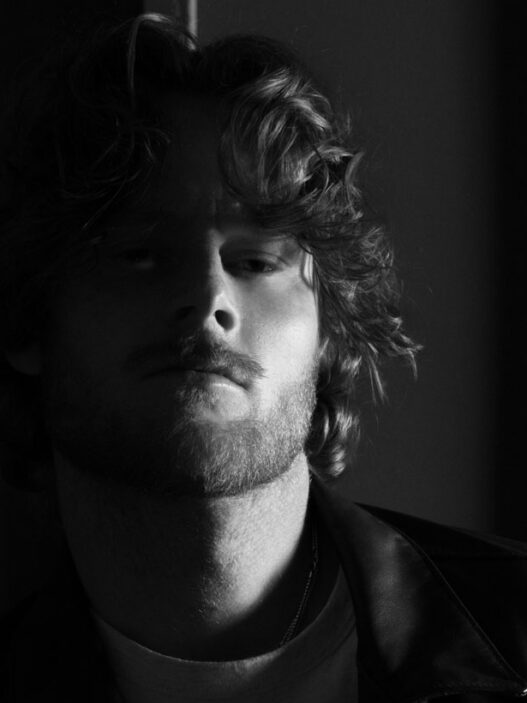










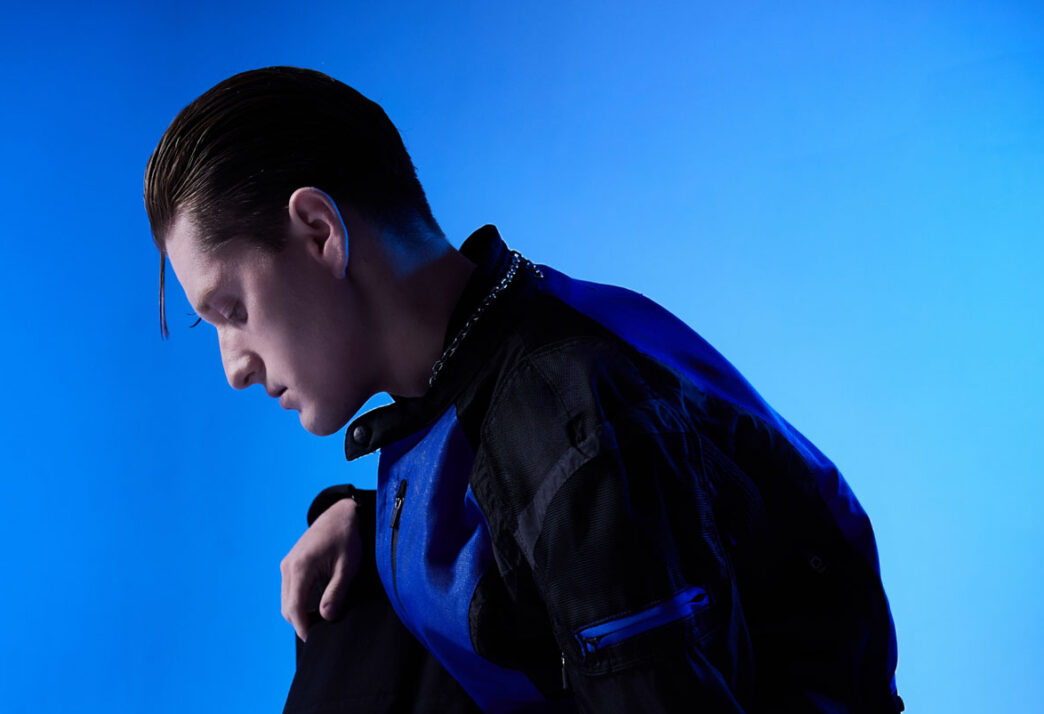
Sound is not something you hear so much as something that happens to you. At the most basic level, it is pressure — waves of compression moving through air, striking the eardrum, traveling up the auditory nerve and into the brain as electrical signal. But the body does not stop at the ear. Low frequencies below 200 Hz are felt as much as heard: the sternum vibrates, the chest cavity resonates, the inner ear’s vestibular system — the one that governs balance — responds. Infrasound, below the threshold of hearing entirely, can induce unease, awe, even euphoria. It is this physical reality that Aaron Hibell has built his entire practice around. “Each note has a frequency and we respond to different frequencies in different ways,” he says. “If we as humans are sixty percent water, then I can imagine not just psychologically but physically different frequencies will evoke different physical sensations. That’s why I’m so particular on every note and chord change in a track.”
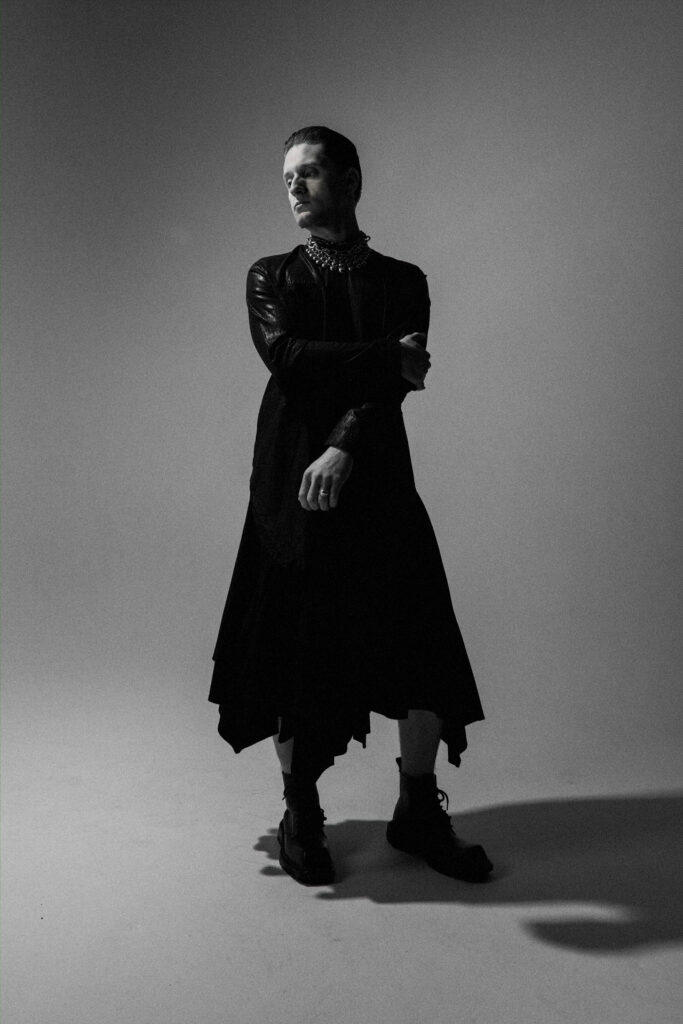
Hibell was born in 1996 and raised in Newton Solney, a small village in the English Midlands. Inspired by Hans Zimmer and Eric Prydz, he picked up the guitar at eighteen, dropped out of university, and abandoned a promising international field hockey career to make music in his bedroom. During the pandemic, he began performing in front of an abandoned monastery in Norfolk, uploading the footage to TikTok. In 2021 he released his debut mixtape, Monastery of Sound (Vol. I), on SoundCloud, eleven tracks fusing orchestral production with electronic music and followed it with two further volumes through 2023. Martin Garrix played his tracks in live sets and the underground took notice.

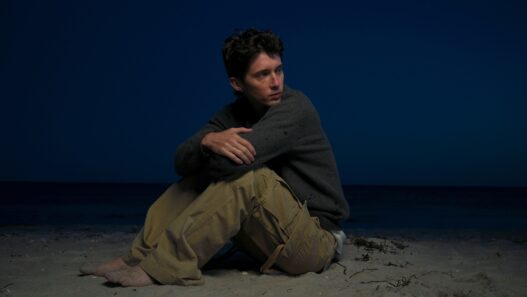
The music Hibell makes is dense with layer upon layer of texture, and he is deliberate about where those layers come from. He records ambient sound wherever he works, wind, water, the quality of silence in a particular place and weaves it into the fabric of his tracks. The coastal recordings he captured during long walks by the sea while making his album Synchronicity sit quietly beneath the electronic architecture, felt rather than heard. “I’ve always been drawn to artists who create an entire world with their music,” he says. The producer he returns to most often as a reference is Burial, whose music, as Hibell describes it, “sounds like South London, kinda bleak, raw but still emotional and beautiful.” The lesson he draws from it is one about specificity: that a place, encoded in texture and frequency, can define an entire sonic movement.
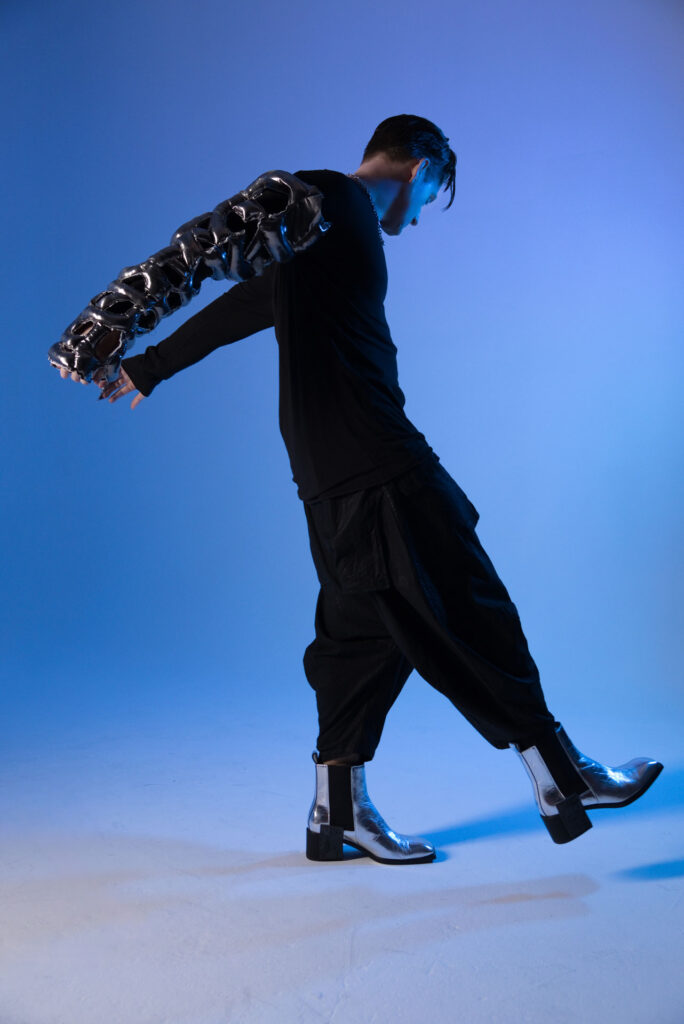
By 2023, his profile had shifted considerably. He contributed “Benevolence” to the Apple TV+ film Tetris alongside composer Lorne Balfe, remixed Ludwig Göransson‘s “Destroyer of Worlds” from Oppenheimer, and reworked Billie Eilish‘s “Chihiro” — a version that amassed over fifty million views across social media. He closed out Boiler Room London, performed a live orchestral set at Hallgrímskirkja church in Reykjavík, and launched his own label, All Time High, whose EP Twilight Zone was eventually signed to Pete Tong’s FFRR Records. In 2024 he released a second EP, Astral Projection, in collaboration with synthesizer duo Felsmann + Tiley, best known for their work with M83, and was named to 1001Tracklists’ “The Future of Dance.”
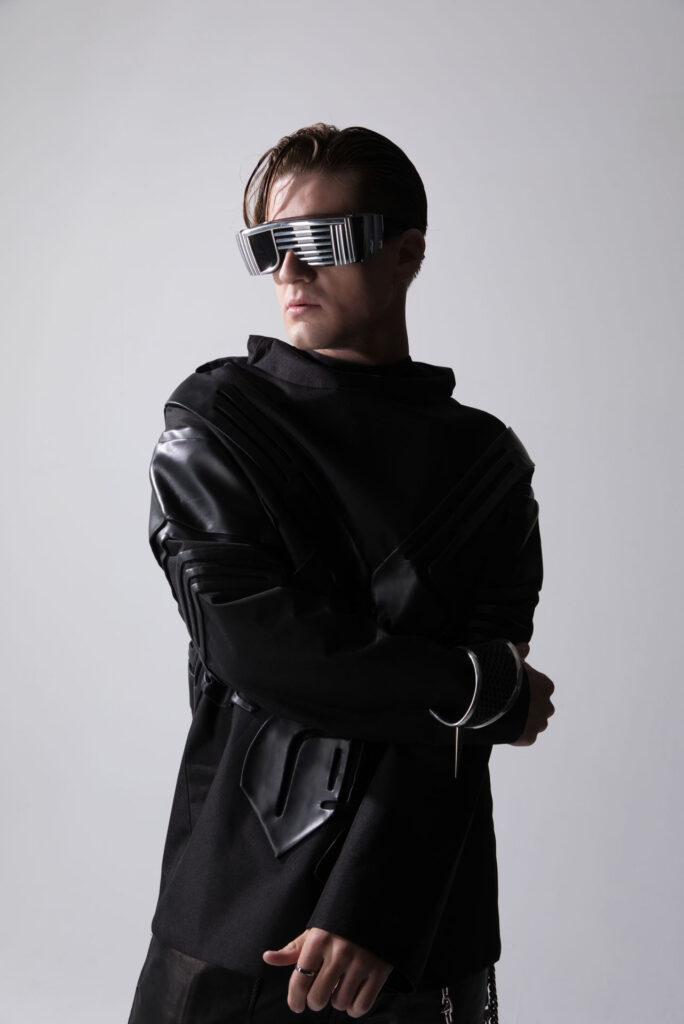
His most recent album, Synchronicity, which he describes as his most personal project to date, reflects evolution. He also speaks about Hong Kong as a possible creative home for his next record, drawn to the city’s energy, “Whatever you’re going through in life,” he says, “you can have a moment of release.” That, too, is physics. Pressure finding somewhere to go.
Photographer: Roman Udalov Stylist: Lisa Smith Craig Assistant Stylist: Sienna Skye Beauty: Christina Spina
A version of this story appears in the Summer issue of Groovevolt.