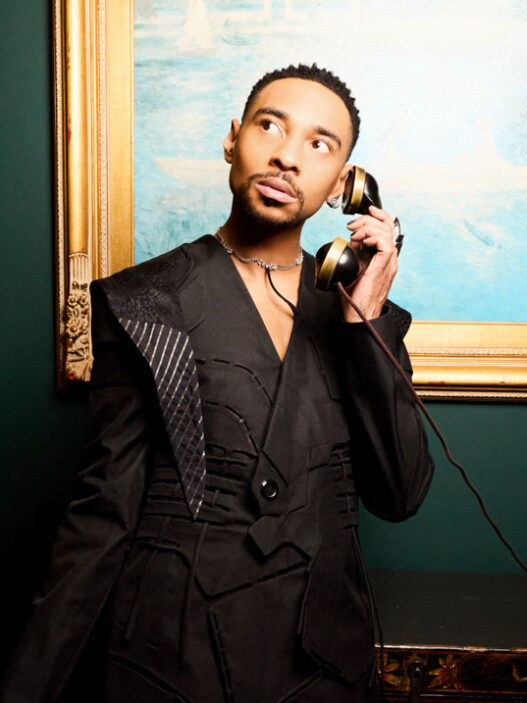



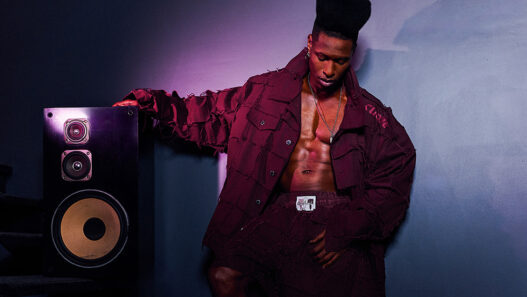

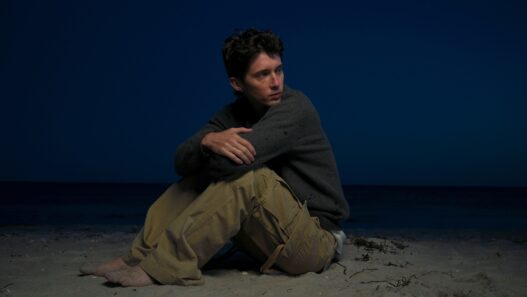

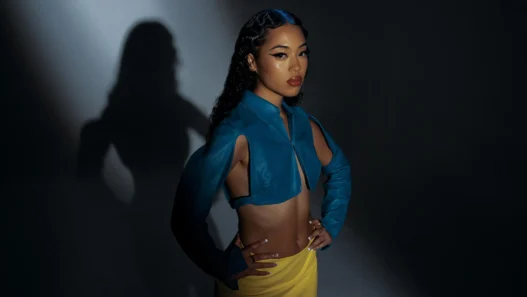

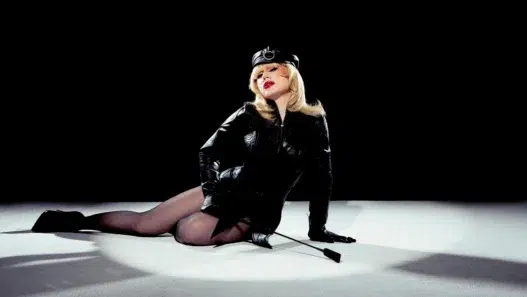
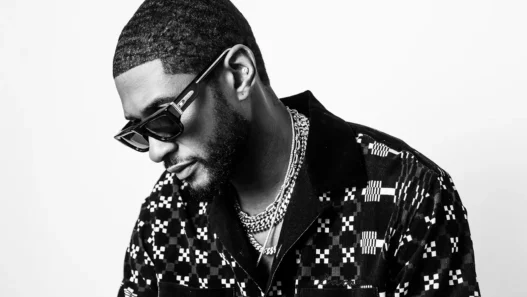
Lucky Daye is running late. “Promo mode,” he says, half laughing, joining the call with the loose, unbothered energy of a man who has said the same sentence a hundred times this week and still means it. It is the posture of an artist who has learned the hard way that the machine keeps turning whether or not you feel like turning with it. But underneath the joke is something that has defined David Debrandon Brown’s career since he was a teenager singing for lunch money in a New Orleans high school hallway: he shows up. He always shows up.
That instinct, more than any single sound or sonic signature, is the through line of a career that has taken Brown from a childhood inside a strict, now-defunct New Orleans church that forbade secular music, to a Top 20 finish on American Idol at nineteen, to displacement by Hurricane Katrina, to more than a decade as an anonymous songwriter and background vocalist, to thirteen Grammy nominations and two wins, and now, in the fall of 2026, to a new label home and a new album he is calling, simply, Aloud.
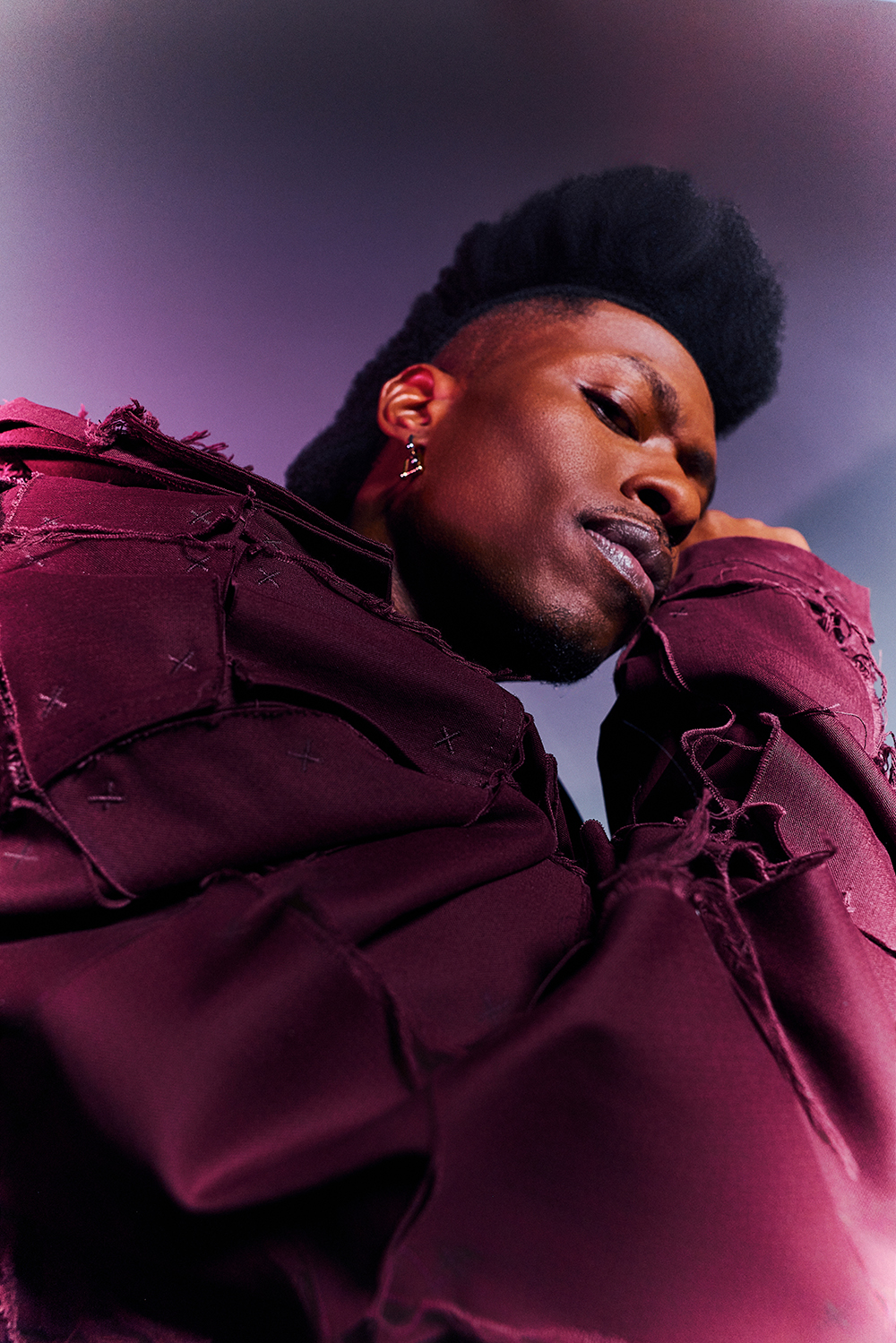
Brown grew up singing gospel and nursery rhymes before he was allowed to hear anything else. Secular music was treated as a kind of sin in the church his family belonged to as a child, and he has said in the past that he did not leave that world until he was eight years old. What he took from it, whether the church intended this or not, was a vocal instrument built on hymnal phrasing and church-choir control, the same instrument that would later let critics compare him to Stevie Wonder and Prince without exaggeration. By nineteen he had made it to the Top 20 on American Idol‘s fourth season, auditioning with Sam Cooke‘s “A Change Is Gonna Come.” Then Hurricane Katrina hit New Orleans, and the momentum he’d built scattered along with his family, first to Texas and later to Atlanta.
What followed was not a fast rise. Thirteen years of ghostwriting for artists like Keith Sweat, Ne-Yo, and Mary J. Blige built his career outside the spotlight. In 2018, he signed with Keep Cool and RCA Records as Lucky Daye, releasing EPs I and II, which led to his 2019 debut album, Painted. Painted garnered four Grammy nominations, including Best R&B Album, proving his voice was sharpened, not dulled, by his years of writing for others. Three years later, his Table for Two EP won the Grammy for Best Progressive R&B Album, his first win. Candydrip followed in 2022 to critical acclaim, debuting in the top ten of Billboard’s R&B album charts. In 2024, Algorithm, an album Daye described as an exploration of futuristic textures, earned a Grammy nomination for Best R&B Album; its lead single, “That’s You,” won Best Traditional R&B Performance the following year, giving Daye his second trophy and thirteenth Grammy nomination overall.
Earlier this year, he signed with Warner Records. The two lead singles from his upcoming album have followed: “Nowhere Fast,” released in June, and “Fly U Out” featuring Leon Thomas, released in August. These songs are the first glimpses of Aloud, expected in late fall. It’s a fresh chapter and, in Daye’s telling, a homecoming.
“My friend likes to sum it up like, ‘Oh, you came back to the barbecue,'” Daye says of the new music’s tone, anticipating misinterpretation. He explains it as the sensation of leaving a familiar place, changing, and returning different, someone people assume went “far away” simply because he tried something new. “I think musically and sonically, I’m an experimentalist. I’m always going to be an experimentalist. And even in this album, it’s an experiment. I guess to people it sounds like going to a barbecue.” When it was suggested the phrase could be read as a nod to reconnecting with Black culture and community, Daye agreed. “Yeah. That’s how I heard it too,” he says. “That’s the only way to hear it when you’re Black.”
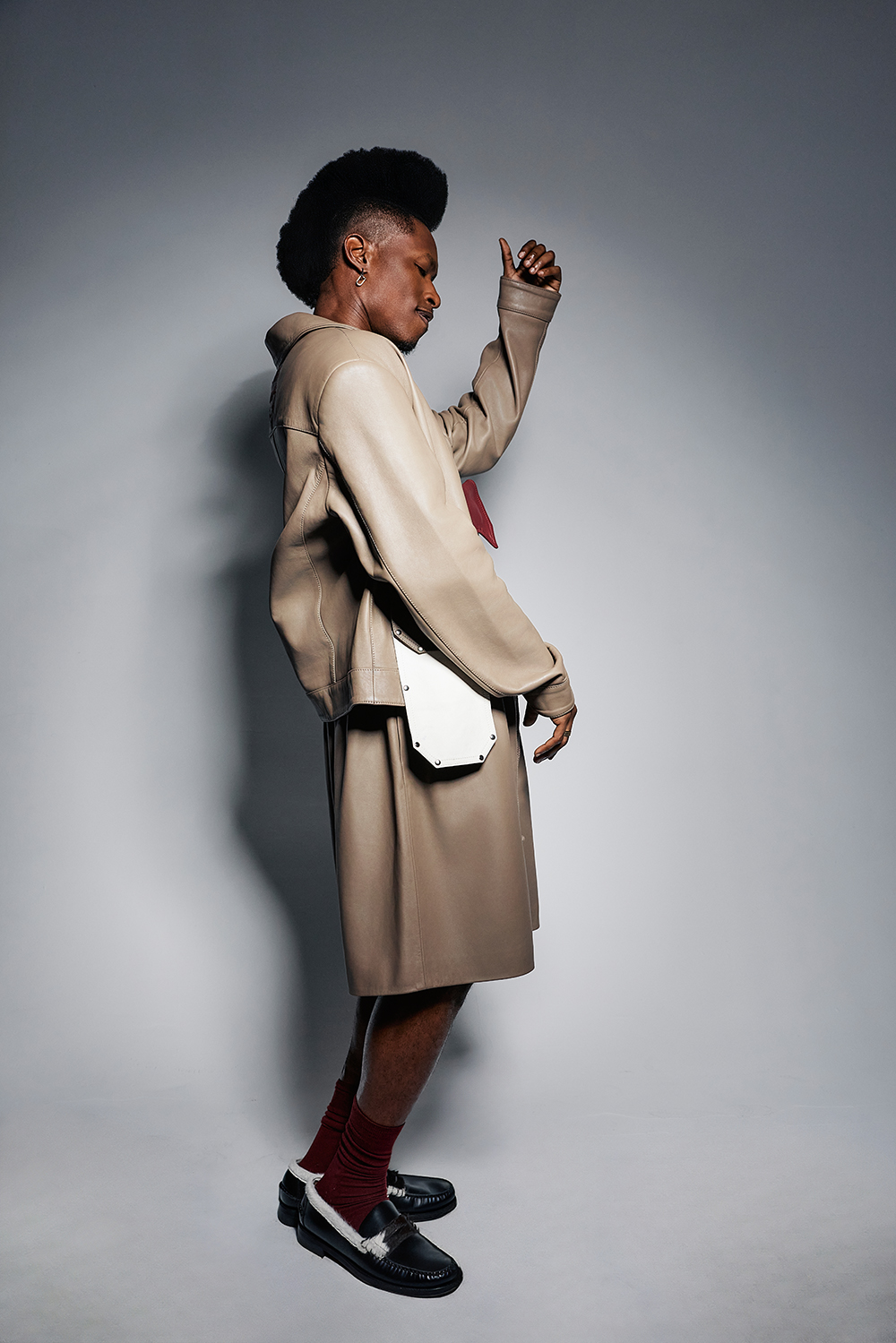
The barbecue metaphor, Daye explains, is about permission. “Certain people feel like if you have a Nike shoe, don’t put it in the Adidas box,” he says. “And I put the shoe in the box because I need to go in the box. So that’s how I create.” He clarifies that the new sound isn’t minimalist but simplifies the complex feeling of falling for someone without fear of heartbreak. “This is more difficult to simplify,” he says, “this feeling in music and this emotion of having a crush and not thinking about getting your heart broke when you fall in love. There’s none of that worry. Just love and real feelings that exist before people get jaded and bitter.”
Daye describes the new album’s sound as a “release, and a relief.” He emphasizes the need for people to dance and have fun, regardless of their circumstances. Unlike his last album, Algorithm, which explored emotional wreckage, Aloud embraces the lighter aspects of life. “This album speaks to me in a way where, okay, life sometimes can be light, and living life is just living it light. This side is more about living life when you’re dancing, when you find somebody you think will never break your heart. This is getting through life the best way, not the hardest way.”
He attributes this shift to a period of self-reflection and travel. “I think God wanted me to trust myself in this process,” he says. “I’m naturally the person that loves without thinking. I jump in headfirst, and you can tell that from the other albums. I speak through the pain of that. Once you get through it, you realize you could go back to trusting without second-guessing.” He observed people living unburdened by anxiety. “I found that in some of the world, most of the world, people are still dancing. People are still having fun. They’re not worried about what you think they’re worried about. They’re not waiting to see what God has for them. They go and get it. We need to do that.”
Daye says collaboration on Aloud differed from previous projects because he refused to work on anyone else’s schedule. He reunited with friends like Leon Thomas and producer Bizness Boi, who assembled numerous instrumentalists. Pusha T also contributed. Daye attributes the expanded collaboration to his new approach: “Obviously God wanted me to trust myself, so I worked on my own time. If they weren’t on my time, it wasn’t happening. So God brought more things. There were so many more people involved on this album because I was working on my time. It’s probably the most collaborators I’ve had on one album.” A favorite result is one of the album’s duets, which nearly didn’t make the final tracklist. “It was a song that got taken off and put back on the album maybe twice,” he says. “At the last minute, we put it back on there.”
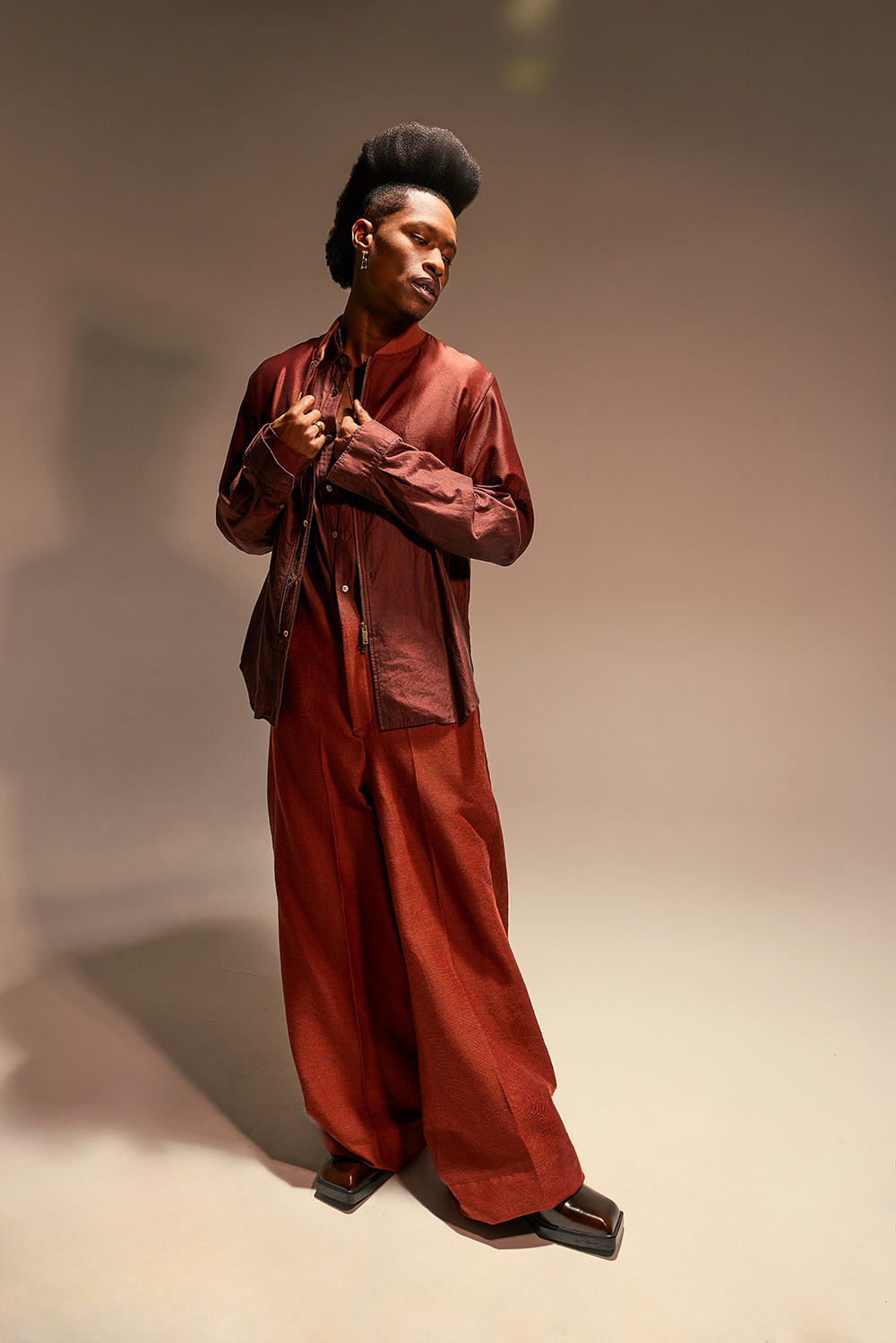
That openness to other people’s ideas, Daye says, comes from a deliberate refusal to sit still creatively. “I don’t feel comfortable being comfortable, so I’m always out of my comfort zone,” he says, when asked whether any collaboration has pushed him past his usual limits. It also shapes how he manages the room. He assumes a collaborator is right for a song simply because they ended up in his orbit, and he tends to let people finish an idea even when his first instinct is to disagree, in case it leads somewhere he wouldn’t have found on his own. Asked whether he tries to steer the creative process, he’s blunt about how loose his grip actually is. “I passively control it, passively,” he says. “I don’t have the energy to argue in a space of creativity. It’s too sensitive.”
He describes the studio sessions for the album’s lighter, more joyful material as reflecting his true personality, contrasting with his polished public image. “Everything else is my art,” he says. “This is me. Like who I am. It’s joking, it’s fun, it’s light. It’s not, ‘oh, I’m crying, I’m complaining.’ It’s not that. This is me.” He characterizes this version of himself as “fearless, bold, brave, not scared, not holding myself back, not letting nobody hold me back,” someone persistent enough to ask a hundred times rather than accept an initial “no.”
Signing with Warner Records has opened doors Daye once doubted were available, shifting his energy “a thousand percent.” He praises his new team, largely “strong Black women” who lead their own operations, for providing a supportive environment he lacked growing up. “It feels like a mother’s love,” he says. “I didn’t have too much of that. So for me, it’s like, God is trying to replace all of that support I wish I had, through Warner, through all these people. So it feels good.” This new chapter, he states, brings “an open lane, a sense of freedom,” stemming from a supportive label.
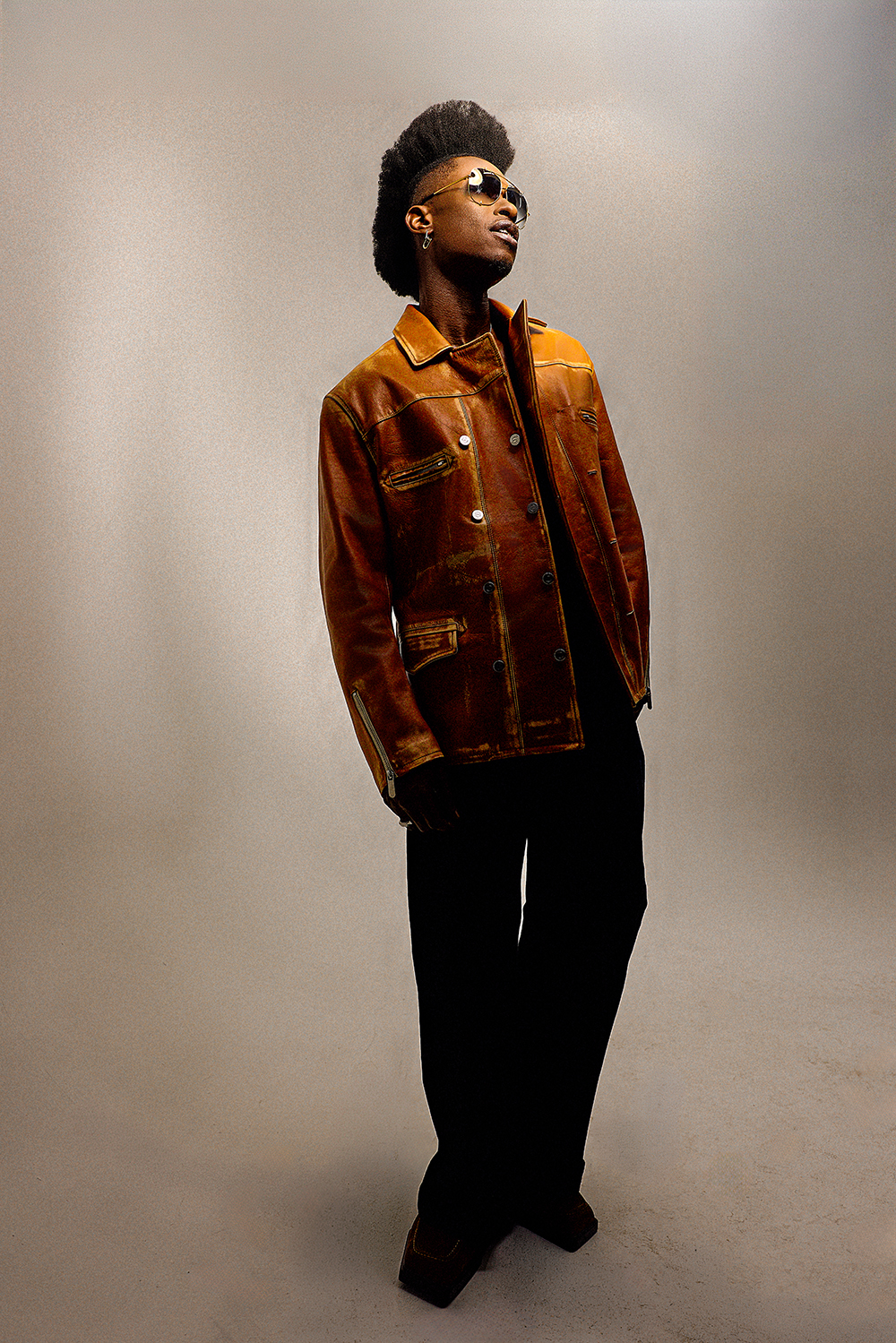
Pushed on the Recording Academy’s recent expansion of Grammy categories, Daye is broadly supportive, framing it as an attempt to give more artists recognition. “I think overall the Grammys do an amazing job trying to get everybody that’s really working their asses off the honor they deserve,” he says, recalling his own early confusion at categories like progressive and rhythmic R&B. He points to the growing crossover success of K-pop artists and the addition of a Best Traditional Country Album category as examples of genre lines “fading away” in a way he considers overdue. “I think they’re just trying to make us more visible to the world,” he says. “It’s going to open up a lane for new artists.”
Asked what it felt like to win his first Grammy in 2022 for Table for Two, Daye doesn’t reach for a rehearsed answer. “I definitely cried. I didn’t expect it,” he says. “It was just so much work. Sometimes when you get the Grammy, you take a second and look down and you’re like, ‘Whoa, I’m way up here.’ It’s very overwhelming. You’ve just been going and going and you never look back, and then you look back and you’re like, ‘Whoa.’ For me, it was special. Being acknowledged, being seen, I felt heard.” He adds, almost as an aside, that he still wishes he’d gotten to accept it on the main telecast stage rather than during the pre-show ceremony, though he says he’s grateful just to hold the same trophy that the artists on the main stage do.
Daye resists the premise that his work has paid off. “I don’t think I stopped to think about that yet,” he says. “I got a lot of work to do. But it is paying off.” He mentions helping his mother in private ways, framing it as a success unrelated to charts. He points to his current album as a breakthrough. “This album feels like a breakthrough moment for me,” he says. “Just being in the space I am, being able to see real clear and say exactly what’s on my mind and make it what I wanted, and still have the support, nobody clashing. It’s just perfect harmony. Every time I start an album, that’s when stuff starts aligning. It’s time, put it on.” When asked about meaningful recognition for R&B, he doesn’t hesitate: a number one record on the Billboard Hot 100.
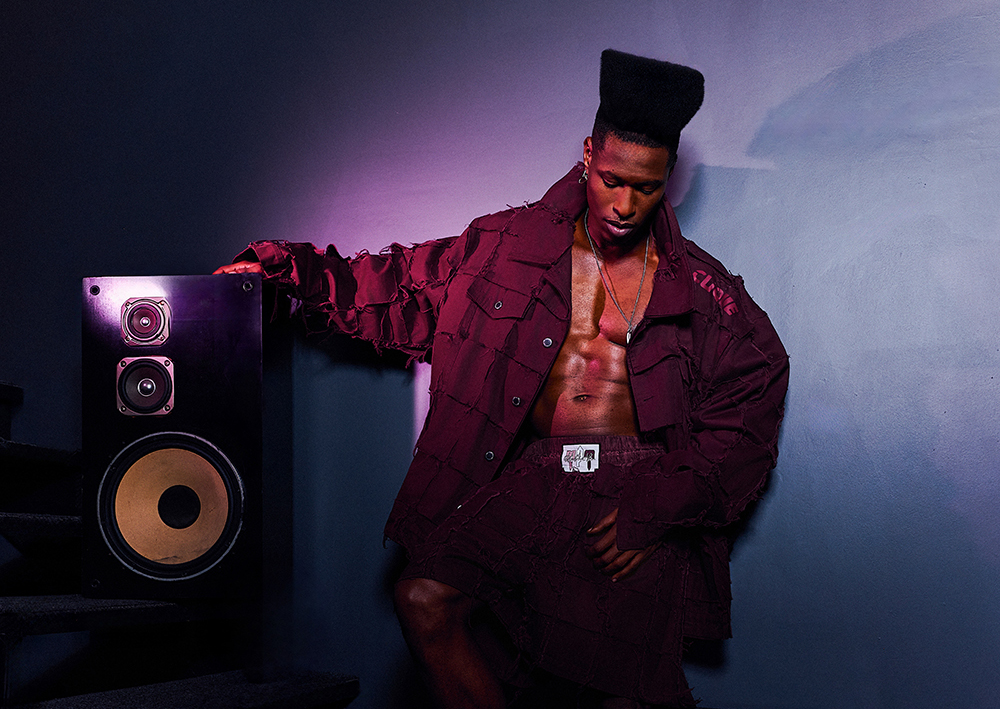
Fashion helps Daye bridge the gap between his public image and his true self. “The music got a massive look,” he says, “but I wanted to express what I felt on the inside, which most people usually see as this clean, suited-up, booted-up version of me. That’s cool, but it’s not true. It’s never been me. I’ve always been a gym rat, athletic, a singing, funny guy in T-shirts and jerseys.” He credits hand-me-downs with teaching him to combine disparate pieces, a skill he now applies deliberately. He identifies the “Algorithm era” as a turning point, framing his current style as intentional. “I do a lot of research for all my albums,” he says, creating a vision before experimenting with collaborators. While Painted was largely solitary, subsequent albums involved collaborators in his vision until Aloud, which he says returns to singular authorship.
Daye’s definition of success has clearly shifted since he started out, and he doesn’t dress up what the early years actually felt like. “When I first started off, I didn’t really care,” he says. “I was over life. I wasn’t expecting anything.” He describes simply working, trying to be great, and trusting the people in front of him even when they weren’t doing their part. “But this time around,” he says, “God is like, I’m gonna give you all of it.”
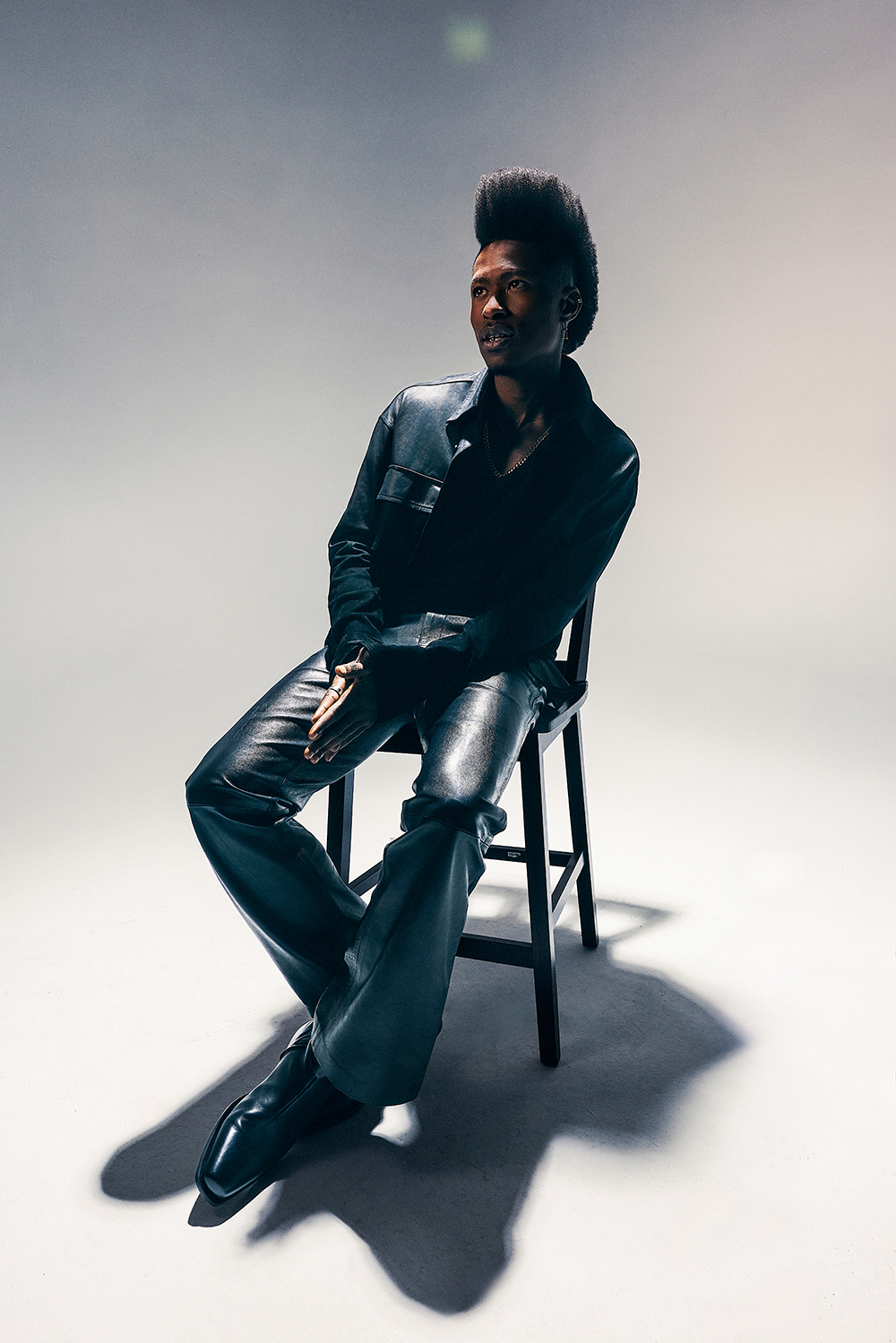
Daye defines success by his morning routine: “I wake up, I look at myself in the mirror. I don’t hold my stomach in, because I want to see what I really look like.” His routine includes a workout, prayer, family calls, and ensuring others’ comfort, though he now prioritizes his own. He describes his days in terms of four workouts: physical, creative, emotional, and mental (through reading). “That sounds like success to me,” he says. He admits to an intense, private competitiveness. “I’m very analytical and critical of myself,” he says. “I compete with myself. It’s crazy, I don’t get it, but I’m like, no, I could be better.” He credits that habit of self-scrutiny to a willingness most people avoid. “You gotta see it,” he says. “People don’t want to look inside though. I’m just grateful that God could allow me to see myself.” He attributes his underlying drive to growing up with brothers and sports, which led people to assume he’d be a rapper. “I’m really a man’s man,” he says, adding that embracing his softer, emotional side has been his hardest challenge.
Some things, Daye is clear, stay off the record entirely. Asked what parts of himself aren’t for public consumption, he answers without much hesitation: his family. “You don’t get to choose your family,” he says. “So anything that comes with it, you kind of have to live with. As you open up about it, people see a weak point. So I stay away from that.” It’s a boundary that tracks with something else he’s proud of and rarely gets asked about: staying financially and creatively afloat without leaning on a heavy social media presence, despite pressure from people around him to post more. “I’m proud of how I could stay afloat and not really be on social like that,” he says.
As for what people might be surprised to learn about him, Daye offers something that has nothing to do with music at all. “They would be surprised to know that I speak fluent Portuguese,” he says, adding that he’s been at it for roughly a thousand days, is now starting French, and plans to eventually take on Mandarin. The goal, characteristically, is tied to ambition rather than hobbyist curiosity. “I ain’t had no show in Japan or none of that yet,” he says. “So they ain’t gonna do it. I’m gonna do it.”
Part of what makes Daye hard to pin down, on record or off, is by design. “I’m way more interesting if you get to know me,” he says. “It’s hard to read what I really mean in my music because I write from five different perspectives. Everything I write is a triple entendre.” One song, he explains, might be about him, another about the person he’s writing for, with the lyrics built to fit whichever perspective is speaking.
When asked about his legacy beyond music, Daye demurs, “I guess I gotta finish to find out.” However, when pressed on how he hopes to have shifted R&B, he is more direct: “I just want to be able to say to myself that I led the train, certain sounds and certain sonics of what I thought the evolution of R&B was going to be. Not that I did it and it wouldn’t have happened without me, but that I caught it first, caught it early, and was able to catch people off guard with the cards I was handed in life and in music.” He views his journey as playing on “hard mode” due to lacking industry connections, going “straight from outside to the Grammy stage.” Daye hopes young artists learn discipline from his path: “You could do anything, as long as you find your consistency, your drive, your purpose, and lock in. Life is good. Life is a gift, and everything should be appreciated. That’s how you fly, that’s how you soar.”
Daye confirms Aloud out now, featuring singles “Nowhere Fast” and “Fly U Out” with Leon Thomas. His journey — from a New Orleans kid writing hits for others for thirteen years to his Warner Records debut — signifies not a comeback, but a deliberate return to his own artistry.
Words: Takisha Williams
Photography: Nathalie Gordon
Creative Direction: Ryan Prescott
Photo Assistant: Scott Sener
Stylist: Lisa Smith Craig
Assistant Stylist: Essence Carson
Hair: Susan Oludele
Make-Up: Johny Saade
Nails: Amber Studer