











There’s a moment at a Matt Hansen show when he holds the microphone into the crowd and simply waits. For a long time, he held back, convinced the room wouldn’t know the words. Then one night in New York City, inside a sold-out Moroccan Lounge, he tried it during “Let Them Go.” The response came instantly, “I don’t even have to sing this,” he remembers thinking. “You guys can do it.” Now it happens regularly.
Hansen is the kind of artist who arrived at his sound the honest way. He grew up in Northern California, started making music at ten, and interned at a record label long enough to realize he didn’t want to be signed to one. From there, he built something most artists would envy: a devoted fanbase, a thriving independent catalog, and a career defined entirely on his own terms.

He toured early on with independent artist LAUV, watching closely and taking notes. The lesson, in its simplest form, stayed with him. “You just make music. That’s what makes your job.”
Early on, he tended toward the hyper-literal, cataloguing every detail of what he had lived through. Over time, he learned that the most universal songs don’t explain everything—they imply it. “When you’re talking about every little, like, tiny thing that happened, people are like, all right, you lost me,” he says. “Taking that simple core emotion of what I was feeling at the time and going from there, I actually feel it more, too.”
His influences surface in the songs without ever announcing themselves. He credits Chris Martin’s songwriting and Jeff Buckley’s poetic approach to heartbreak as touchstones, but the lineage runs deeper than that. He can trace the moment music stopped being background and became something else entirely: he was eleven, listening to Coldplay’s “Sparks,” a song he’d heard before but never really listened to. He’d never been in love, didn’t know heartbreak yet—but felt all of it anyway.

“I just felt the feeling,” he says. “From that point on, I really had always connected to the words whenever I would be singing. I would never be going through the motions ever. Every time I would sing, I would act like I was feeling it in that moment.” He laughs, attributing part of that instinct to the theater kid in him.
His catalog has accumulated its own kind of mythology. “Let Them Go,” written four years ago, is one of those songs fans won’t forgive him for skipping. “Something to Remember,” despite being, in his words, “a vocal nightmare,” has become a live staple. Its title came from a late lyrical pivot that turned love into a noun: “once the picture on your dresser, when did I become your something to remember?” He wasn’t sure it made sense when he wrote it. Then he felt it, and it did. He laughs, admitting the lines he’s most proud of are often the ones he almost cut.
Then there’s “Yellowstone,” which opens with a lyric about a supervolcano threatening to end the world and somehow becomes a love song. He hated it for a long time. He came around. “It’s kind of campy and fun,” he says now, grinning at his own audacity. “Like, what was I doing?”
But if you want to understand who Hansen actually is through his music—not just the artist, the person—he’ll point you to “Someone to You.” It’s the song about loving someone who was everything to him while he struggled to be anything to her. The chorus, he says, is every version of himself from that time distilled into a few lines—wanting simply to be needed back by someone who meant everything to him. Nothing more. Nothing less.
That emotional honesty carries into the songs that are hardest for him to perform now. “Better Off Without Me” and “Break My Bones” are not singalong moments, which means the room doesn’t lift him the way others do. It’s just him and the lyrics, and whatever memories they pull up. Singing his own songs, even the difficult ones, is what he calls exposure therapy.
To remain emotionally grounded, Hansen spends time outdoors, often by the ocean. Off stage, he’s drawn to the ocean. He grew up moving between Northern and Southern California, spending stretches of time at the beach several times a week. The Pacific, he says, has a way of making everything feel appropriately small. “You’re at the mercy of whatever the ocean gives you,” he explains, surrounded by something vast, indifferent, and strangely beautiful. He talks about it the same way he talks about music: with the clarity of someone who has identified what actually brings him back to center, but he does admit he’s been surfing less these days. It’s understandable; he’s been busy.
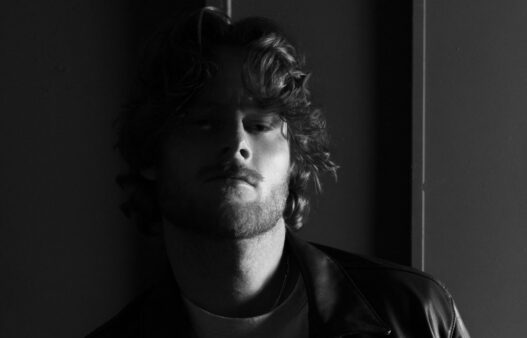
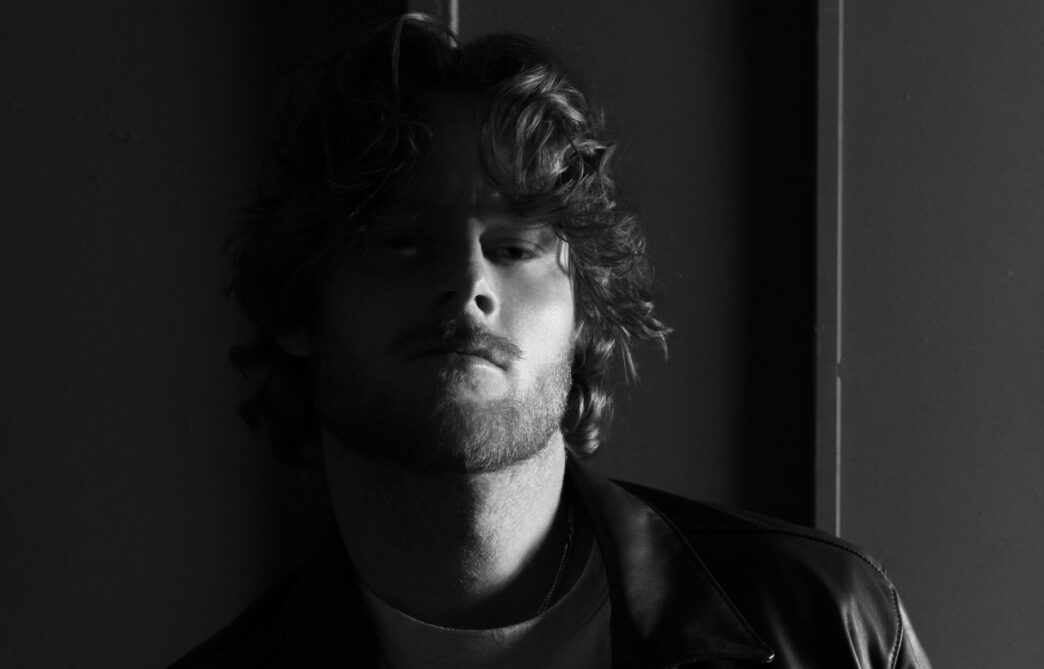
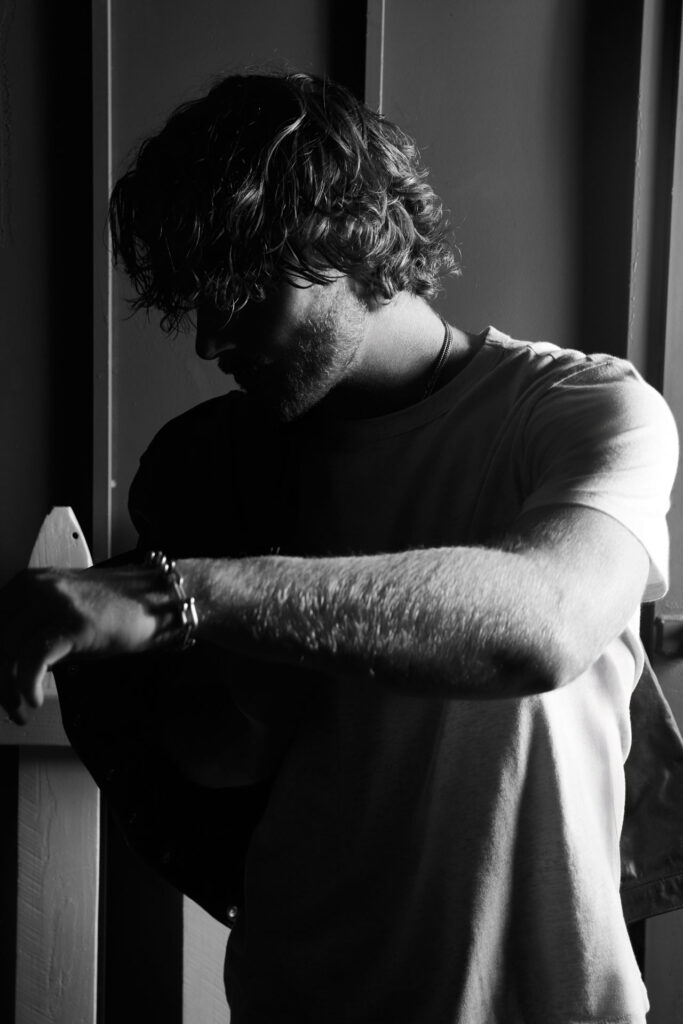
That same instinct shows up in how he presents himself. Over time, his aesthetic has drifted darker. He gravitates toward black clothing, especially black leather and silver jewelry, a combination that requires little thought but always feels right. “I wanted to kind of mirror the way that I was feeling with what I was wearing,” he says. “And to me, dark colors give that energy.” He adds, with full self-awareness and a hint of humor, that lighter tones on him tend to read differently—“I look very, very red and white,” and that darker shades simply balance things out.
Mornings often begin with a full album played straight through, “I put on a record in the morning and listen to it in its entirety as I just have some coffee,” without skipping. Elliott Smith has been in heavy rotation. So have Kehlani, Geese, and Rufus Wainwright’s “Cigarettes and Chocolate Milk,” which he calls very weird, very good, and highly recommended.
His debut album, Orchid, is out now. The title comes from a song he wrote three years ago, built around a metaphor that stayed with him: orchids can live almost indefinitely when cared for, but fade quickly when they’re not. He’d been thinking about love, and the kind of emotional imprint that doesn’t disappear just because you want it to. “I can’t wipe those memories. I can’t get amnesia, even though I wish I could,” he says. “It’s okay that it’s still there. This song is basically the epitome of what I’ve been trying to say for five or six years.”
Across tracks like “Compass,” “Same Time,” “Vision,” and “Somewhere In Between,” the album moves from pain toward something more hard-won: hope that isn’t immediate, but earned. “Maybe it’s not quickly,” he says, “but you will feel good again one day.”
Matt Hansen has been making music since he was ten and has spent most of his life immersed in it. He finds the peace he needs in sound—in playing it, in hearing it, in the quiet that exists between notes. When asked what he would be doing if music hadn’t worked out, he pauses. “I’d probably be dead, to be honest,” he says. “I’ve thought about that question a lot.” What he keeps returning to—both in life and in song—is the idea of self-preservation through honesty: learn to love yourself, make sure you’re okay before trying to help anyone else. Otherwise, as he puts it, “it’s just two broken people. Swinging around.”
Photographer: Roman Udalov Stylist: Abid Haque Assistant: Denver Nelson Hair & Make-Up: Christina Spina
A version of this story appears in the Summer issue of Groovevolt.