












At first, Agridulce, meaning bittersweet in English, might appear to be a documentary about bachata. But as the film unfolds, music becomes the way into something much bigger. Following four children – Edickson García Disla, Frandy Direze, Orianny Bonilla and Yerian Castillo – over roughly five years in and around Cabarete, Dominican Republic, as they grow up studying bachata at Academia de Bachata, it captures them growing up, finding their identities and discovering what music can give them along the way.
Bachata was once known as música de amargue, with ‘amargue’ often translated as bitterness, although Benjamin de Menil, the 52-year-old New York City native, says the meaning is more complicated than that. “In the musical context of the Dominican Republic, it is this feeling of bittersweet,” he explained. “Often, it’s the feeling of being in love or being rejected, or being in love but there’s something that’s getting in the way.”
That feeling became the starting point for Agridulce. “That duality, I thought, that’s in music is really a reflection of this duality that exists throughout, in all different elements of people’s lives,” he said. “And certainly in the stories of these kids.”
Also a New York City native, 53-year-old Pavich came to the project from a very different perspective. While de Menil had spent years immersed in Bachata and already knew the children through the music school he founded, Pavich knew very little about the genre. Rather than seeing that as a disadvantage, he believes being an outsider is often what makes a documentary interesting. “I always feel like an outsider, especially when I make films. And I think that, to me, that’s a good thing,” he said. “I’m not interested to make a documentary about something that I know everything about. Like, I’m gonna now teach you what this is. And to me, that’s not interesting.”
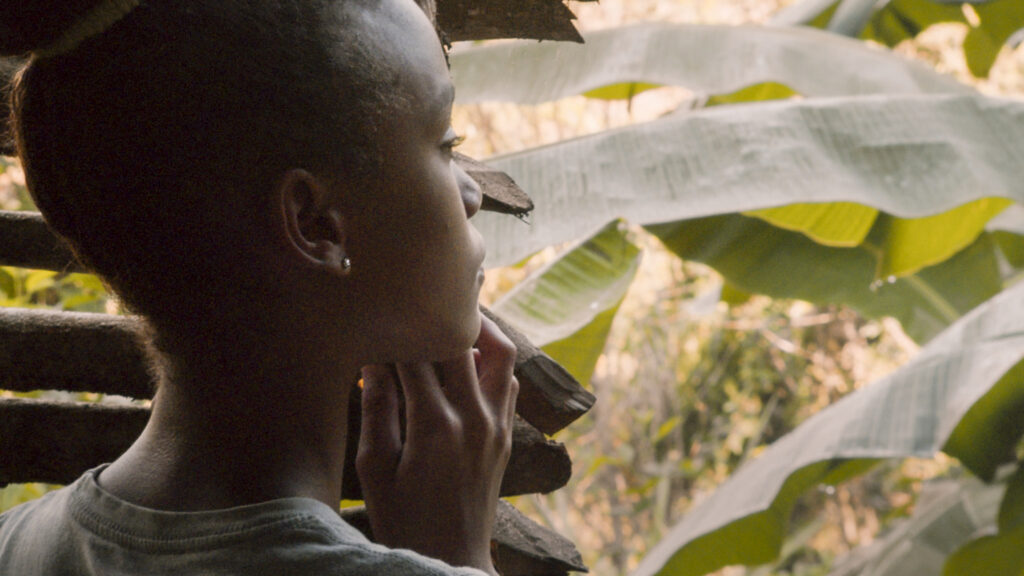
Instead, making the film became a way of learning. Pavich arrived with “completely fresh eyes”, while de Menil brought his existing relationship with the music, school and children. That did not mean, however, that de Menil knew where their stories would lead. “Both of us, I think, were constantly being surprised and seeing new things and learning new things and being shocked and overjoyed with the stuff that we would see,” Pavich said.
That five-year filming period is a huge part of what makes Agridulce work. Had the filmmakers followed adults for the same amount of time, Pavich believes the passing years may not have been quite so visible. “Children are physically changing, they’re maturing, their musical abilities are changing, their emotional depth is growing because of this musical education,” he explained.
De Menil and Pavich chose not to divide the film into obvious chapters or announce each passing year. Instead, they let those changes occur naturally on screen. Faces change, voices mature and the children begin to express thoughts they may not have been able to put into words when filming began.
While Agridulce looks at a new generation discovering bachata, the genre itself has gone through its own transformation. The globalisation of bachata. for de Menil, has created opportunities for Dominican musicians to travel, reach much larger audiences and build careers. But something can also be lost in the process. “The bachata that’s being exported, part of what made its export possible was this kind of blending with global pop music,” he said. “Maybe there’s a bit of the essence or the spirituality of the music that can get lost along the way.”
That question of tradition and change is something de Menil has also had to consider through the school. “We definitely do not want to be telling them that you have to just stick to the tradition and not make this music your own,” he said. “They have to express themselves and find their own voices.”
What is important then, is for the new generation to know where the music comes from. “The traditional music is still very much listened to and popular,” says de Menil. “There’s not necessarily the divide between generations in terms of music affinity that exists in the US or in other places,” de Menil explained. “Music is more of a multi-generational thing that is shared.”
And perhaps more simply, the children connect with it because they like it. “Traditional music is fun and it’s beautiful,” he said. “If the music is good, it’s gonna appeal to them for the same reason as it appealed to the generations before.”
Agridulce itself also changed as the children did. Pavich says there was never a fixed idea of where the documentary needed to end up. Unlike a documentary looking backwards at something that has already happened, there was no known beginning, middle and end. They were filming lives that were still unfolding. “To go in with any sort of expectations wouldn’t have been honest filmmaking,” Pavich said. “We’re just following these kids around and, you know, who knows where the roads are gonna lead or where the relationships are gonna be.”
De Menil’s original idea for a bachata film began long before Agridulce. Having worked with older bachata musicians, he had once imagined making something closer in spirit to Buena Vista Social Club, focusing on an older generation and the history of the music. Starting the school changed that. “I started thinking, actually what I’m seeing here could be a lot more interesting, is kind of discovering bachata through the eyes of children,” he said.
Even then, the school was initially supposed to sit much more at the centre of the documentary. But as filming continued, the children began taking over the story. “It became more and more about the kids and not about the school,” de Menil said.
Some of the biggest surprises came from what those kids eventually had to say. Pavich points particularly to Frandy and Edickson, who he describes as “the two big philosophers” of the film. Their interviews frequently went far beyond what ultimately made the final cut. One of the moments that stayed with him comes towards the end of the film, when Frandy tries to describe what music does for him. “It makes holes in him, it fills the holes,” Pavich recalled. “It’s incredible.”

Yerian surprised them in a different way. For the majority of the film, he seems more comfortable expressing himself through music rather than conversation. During interviews he would be closed off, until a conversation with Frandy revealed something else. “Yerian kinda comes out with this philosophy,” de Menil said, recalling his idea that words themselves are not what hurt someone, but rather their thoughts about those words. It is a small moment, but one that says a lot about what the film eventually became.
When asked what they hope the children will feel when they watch the documentary years from now, Pavich hopes they recognise themselves in it. “I hope that they view the film as an honest representation of their lives and of their personalities,” he said.
De Menil added that he had thought about the complicated emotions and perhaps embarrassment that might come with watching yourself as a child. He revealed he had recently spoken with Orianny, who has seen the trailer. “She really loved it,” de Menil said. “I was relieved, happy by that.” For him, the hope is that years from now the children can look at Agridulce and recognise not only an honest version of themselves, but a period in their lives worth remembering.
For de Menil, the school gave the children somewhere they could experiment and grow. “The school is like this safe place, this place where they really could discover things, discover joy,” he said. “This film, in the sense that it reminds them of this period of their life, I think is something that, that’s what I hope anyway, that they will continue to appreciate.”
Agridulce begins with Bachata, but it ends up being just as much about time. Music gives the children a way to express themselves, while the film gives them the chance to one day, meet their younger selves again and see versions of themselves they may barely remember. And perhaps that is where the title feels most fitting. Childhood is temporary, growing up is inevitable and looking back is almost always a little bittersweet.