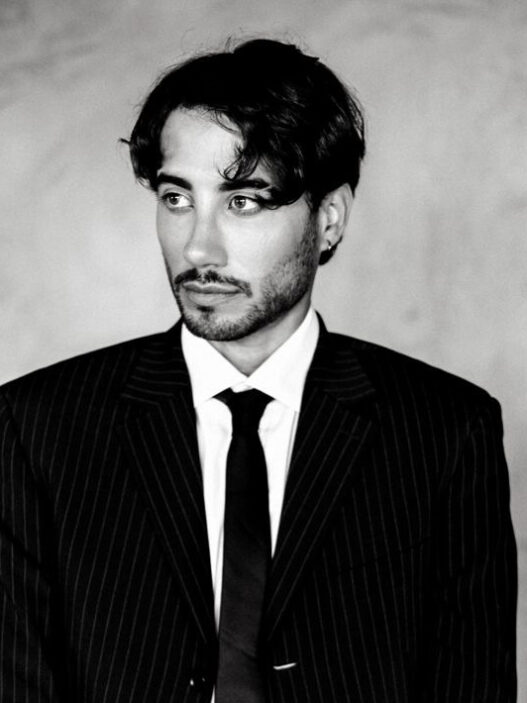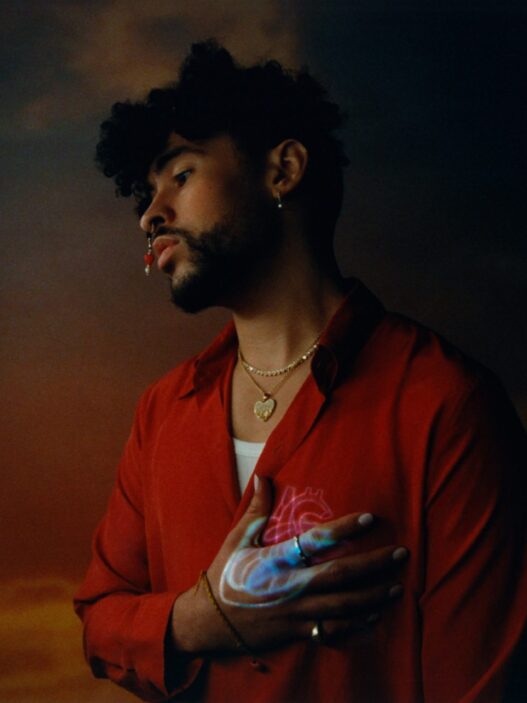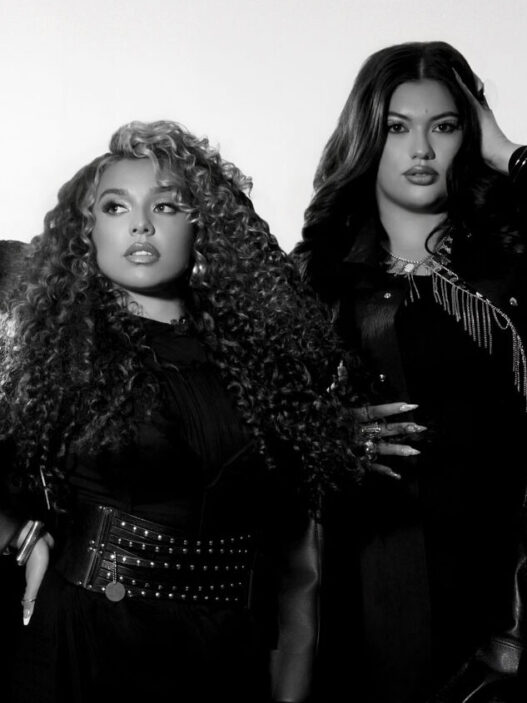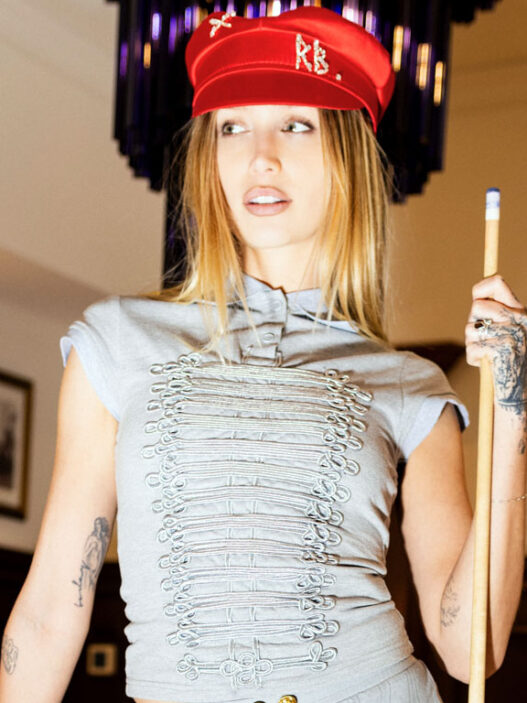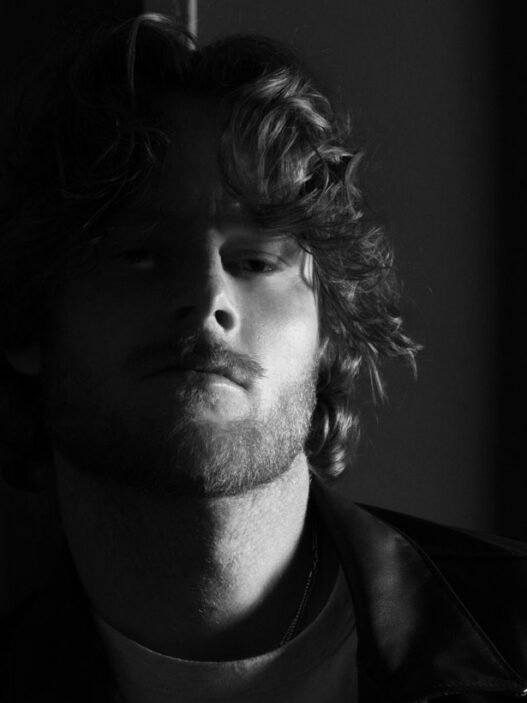











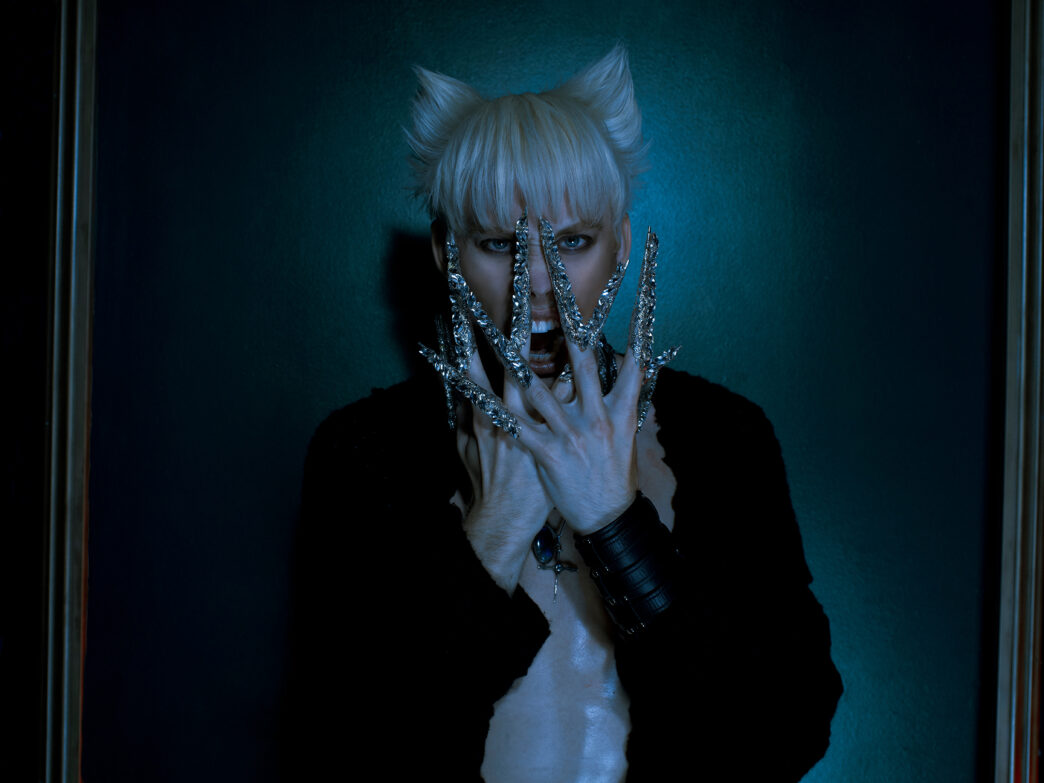
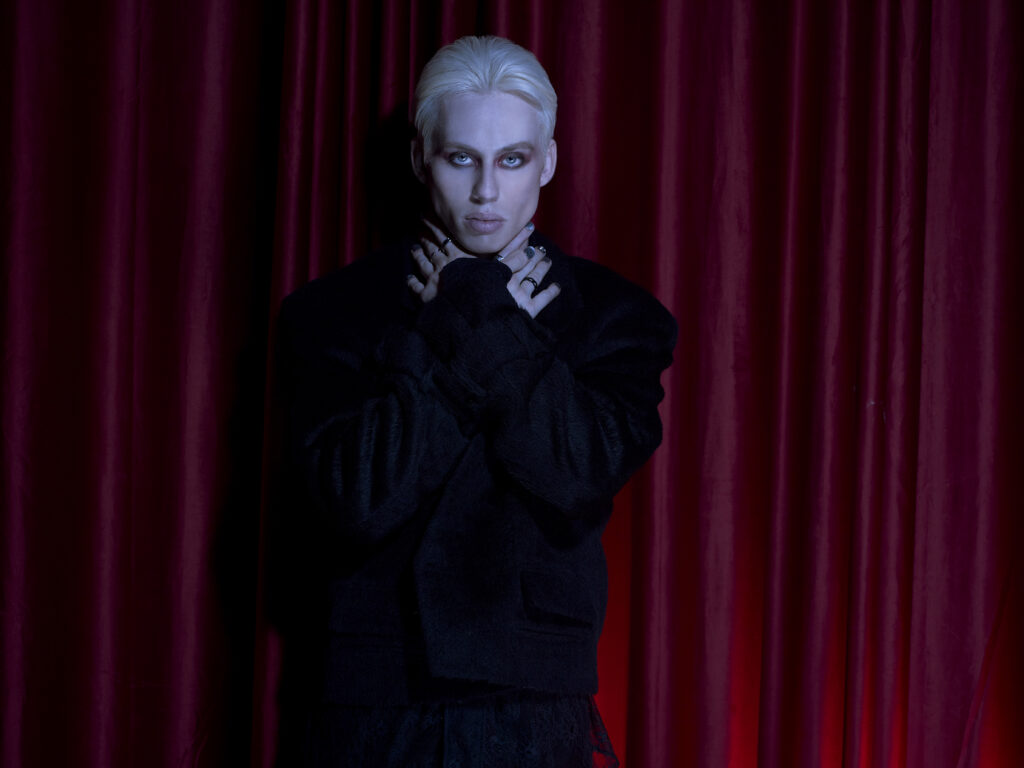
When Haiden Henderson arrives on set, the six-foot-five, blue-eyed, bleach-blonde Californian cuts a striking figure, even in Los Angeles. He’s wearing silver sweatpants, a black tank, and his signature mismatched shoes. He looks, in some ways, like the embodiment of his upcoming album, Bleach: edgy, a little rough around the edges, and the effect holds until he greets everyone on set with a soft voice and a big smile.
Henderson has been making music since 2020 and signed to Republic Records in 2023, but this year, as he ramps up toward the release of his album, a lot has changed for the pop artist both musically and personally. When I catch up with him the next day in the studio, he’s an open book.
Looking back on his start, Henderson shares, “I started by doing everything on my own, really. I started making music in general in the pandemic, and it was all me and a guitar in a bedroom, so collaboration was something that was very difficult for me, initially. I would go into the studio, come up with something that I liked, but I would go home and rewrite the whole thing. And there are still shades of that that he makes fun of now. He’s like, ‘Haiden’s gonna go change this entire song and then he’s gonna come back.'” The “he” that Henderson is referring to is none other than producer Benny Cassette. Perhaps most famous for his work with Kanye West, Cassette has been working alongside Henderson on Bleach since the top of 2026, and it’s been a process.
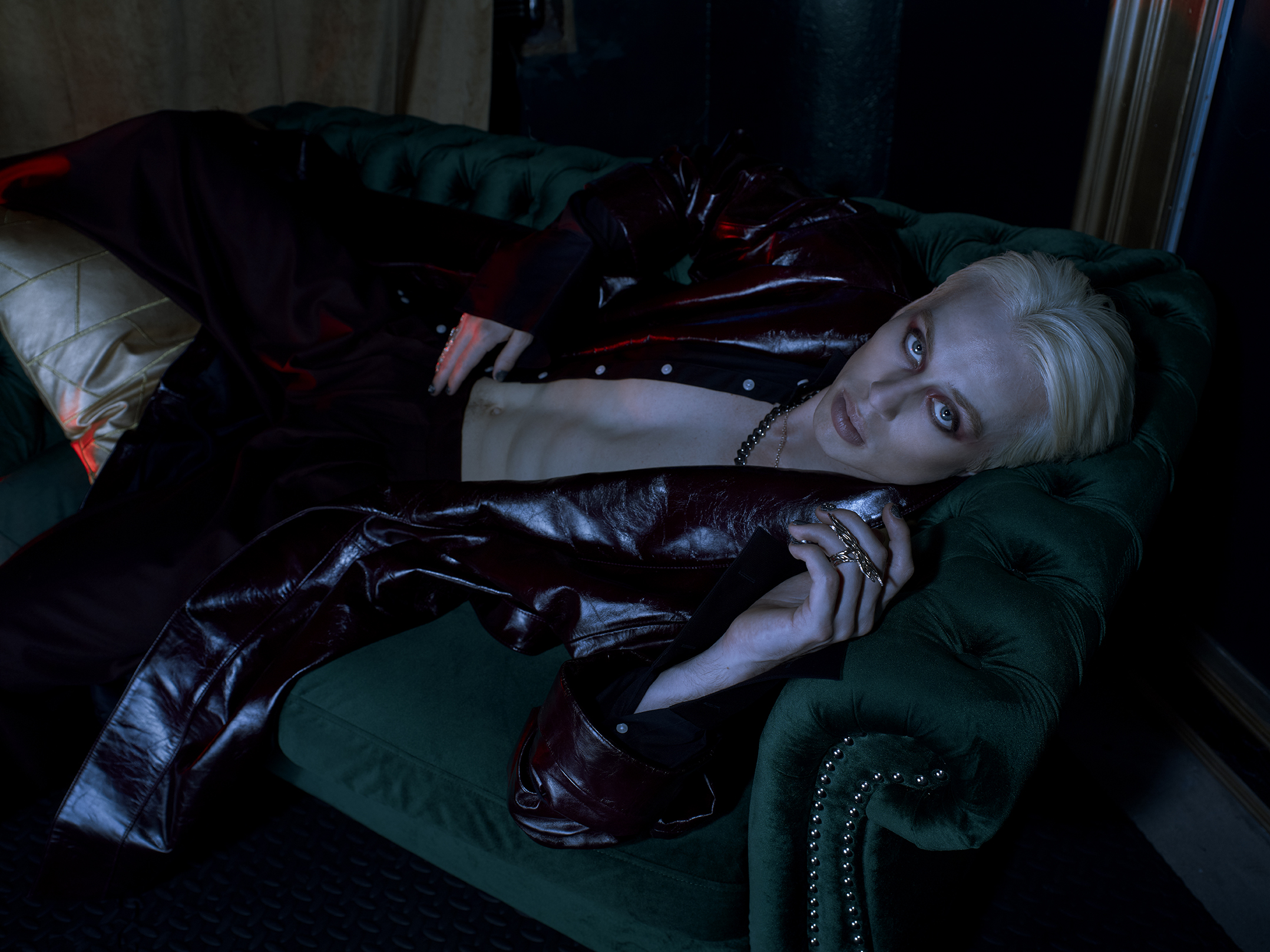
This project marks the first true collaboration for Henderson. When he started working with Cassette, he says, “I came in very humble, realizing that if I wanted to make something different and something better than what I had done in the past, I was gonna have to change my process. I had been doing my EPs in a very strict way: a lot of control, a lot of me doing stuff on my own, and micromanaging a lot … kind of brute-forcing my way through songs.” Cassette is kinder, saying, “He’s meticulous. He’s a perfectionist. This album should have taken a year to make, and we literally made it in basically two full months of work. I’m doing a lot of things that we would do on Kanye albums that we’d spend a year on.”
It’s a version of this brute force and drive for perfection that Henderson has tried to leave behind in the world of Bleach. At the beginning of their partnership, Cassette pushed Henderson to be “less perfect,” which Henderson says triggered a turning point. “I realized I was writing about these raw emotions, but everything was so polished … so that was the big disconnect for me. It’s like, if you’re singing about something raw, make the thing reflect the feeling that you’re trying to get across.”
Listeners will enter Henderson’s new world through the first track, “Dumb Blonde,” which serves as “the grand staircase of the album in [his] head.” As the title suggests, the song immediately leans into Henderson’s new world with him chanting “I just wanna be a dumb blonde.” As we chat, he seems very different from the intimately charged and chaotic persona that frequently appears on his Instagram feed. His peaceful energy and friendly demeanor seem at odds with his debut album, but if observed carefully, there’s more to Henderson (and his music) than meets the eye (or ear). When asked about the desire for newness, he says, “I realized as we were writing it that I’m somebody my entire life that had been so consumed by the desire to be liked by other people. It has really controlled everything about me so much that I genuinely don’t remember much else outside of my childhood other than trying to be liked by everybody around me.” This debut album, aside from being less polished musically, is also a rawer, more authentic version of Henderson himself. “I think over time that made me so malleable. I was always willing to change and become whatever I needed to to make people like me, and that has repercussions over time. You start feeling like you don’t really know yourself when other people aren’t around to give you feedback.”
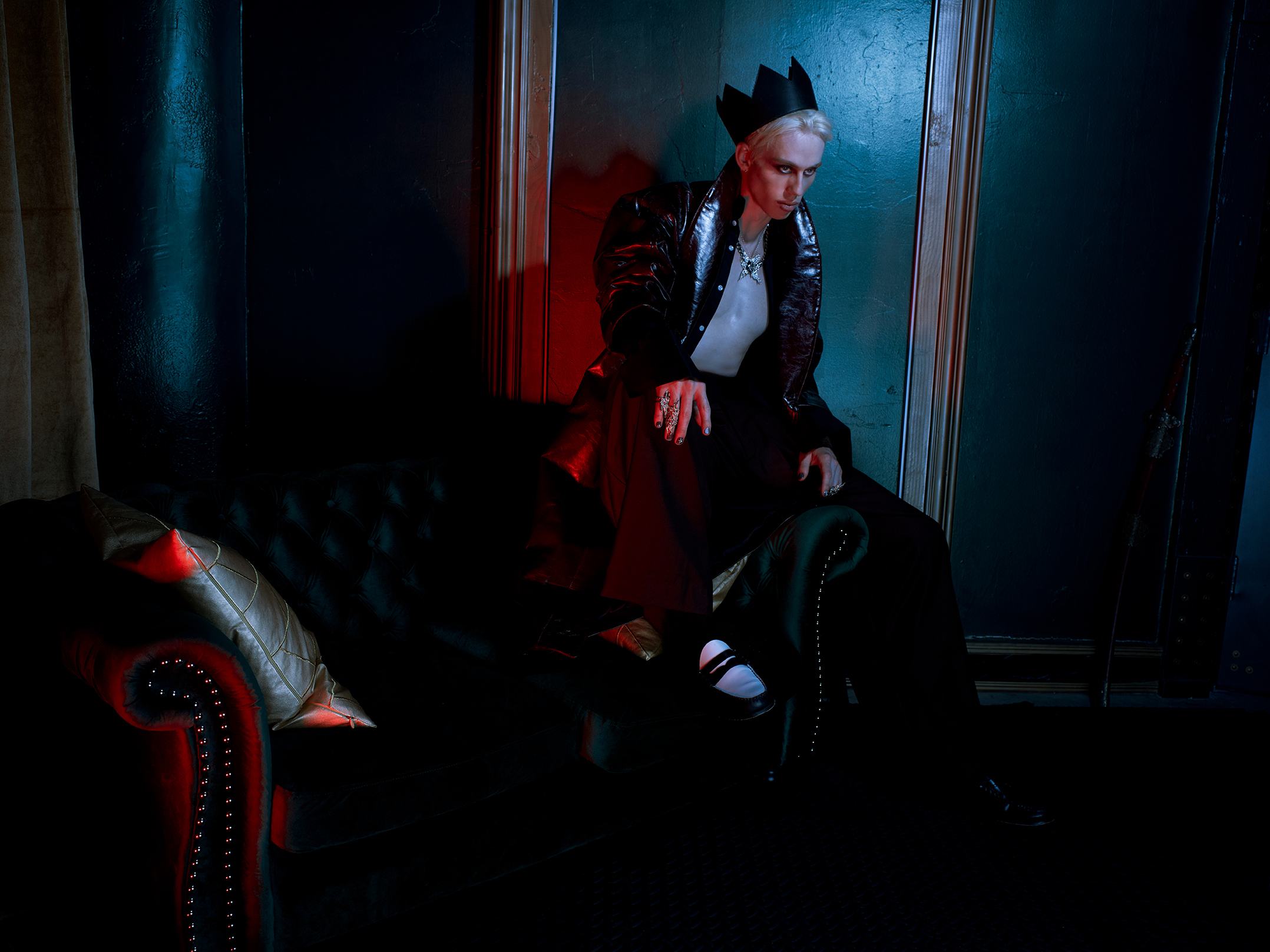
As “Dumb Blonde” wraps up, Henderson’s younger sister Bella, manager Liz Eason, and Cassette (and, of course, Cassette’s dog) are all positioned around Cassette’s home studio as Henderson openly discusses aspects of his inspiration and personal life that only come with age and a desire for something better out of life. “I think that was very physically represented by me just wanting to change my hair. I think bleach in general, not only is it something that’s very visually striking about me compared to the brunette renaissance of boys that we have right now in the music space, but bleach is also a whole world within that metaphor, like the willingness to use a chemical that’s corrosive to make yourself more beautiful.” He pauses on the contradiction. “I thought that that duality was interesting.”
Pivoting from himself, Henderson then plays “i wanna be your girl,” which was inspired by his new relationship with Sophie Silva, who fans saw bleaching his hair on stage with 5SOS.
The couple started dating in October 2025, became official in December, and hard-launched online when a fan spotted his thumb in a story posted by Silva.
Fittingly for two people whose careers play out largely online, they met there too. “Modern love,” Henderson jokes. Not, however, through a dating app. “I’ve actually never had a dating app. I’m kinda scared of them,” he says. “I feel like Instagram is a dating app. Everyone’s just showing the best, hottest versions of themselves. It’s like, this is the socially acceptable dating app.”
He had admired Silva’s style from afar before eventually sending what he calls “something stupid” to her DMs. She responded. Then, while on tour in London, Henderson decided to escalate. “I sent her a risky DM right before I went on stage in London while I was very sick and had an IV in my arm,” he says. “So I sent it, and then got up and went on stage, played a show, and came back, and she had given me her number.”
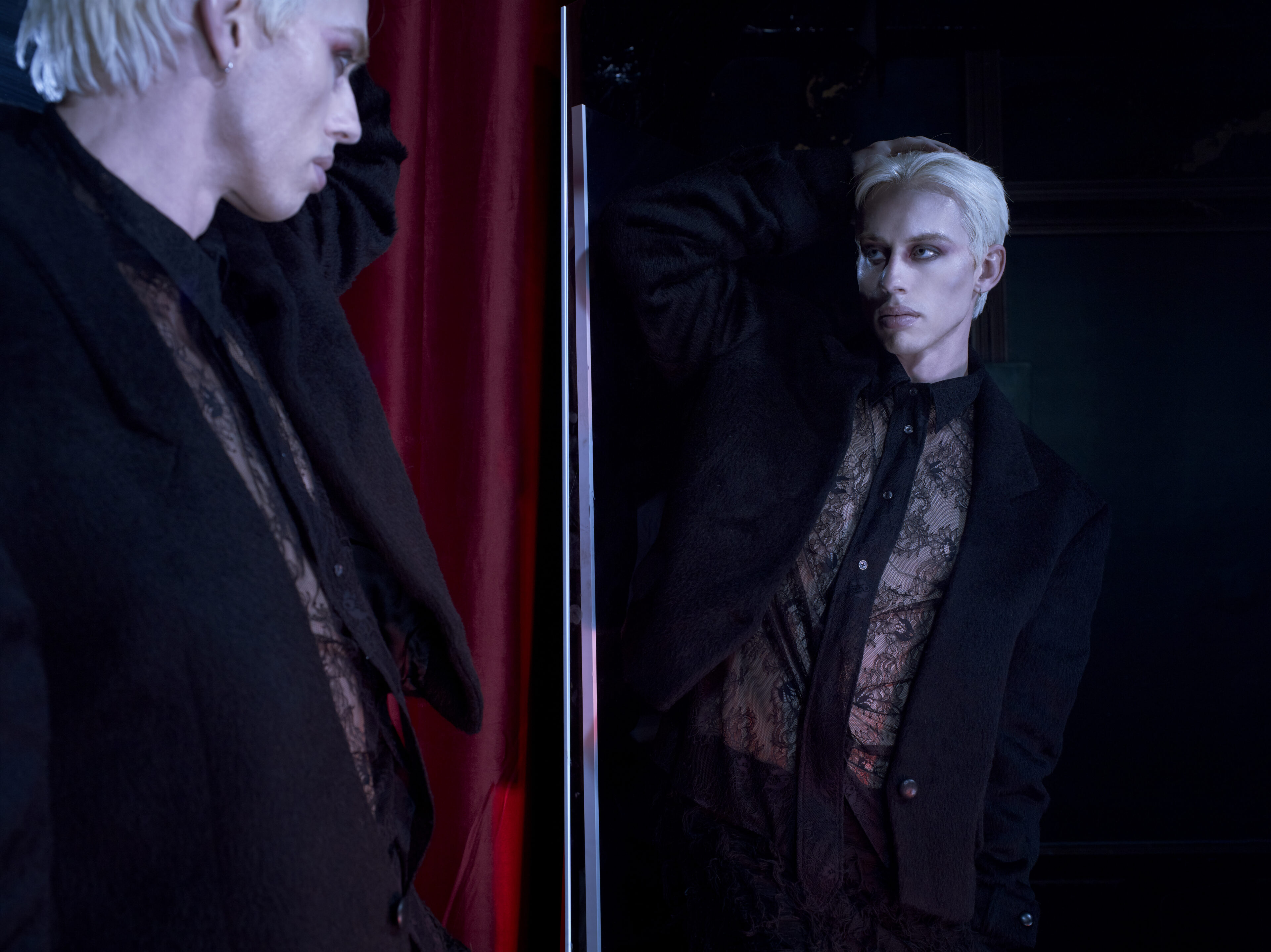
The song opens with “But she’s usually into girls,” a nod to Silva’s bisexual identity, but there’s more there. Henderson expands, saying, “Even a song like ‘i wanna be your girl’ is one about wondering if we would be closer if I was just your friend and if you would open up to me more. But also, it’s because my girlfriend’s bisexual, and I always wondered, ‘If I was a girl, would you, like, like me more in every capacity?'”
That relationship has become more than fodder for love songs. Across Bleach, it gives Henderson a place to investigate sex, desire, and what exactly he thinks being a man is supposed to look like.
Sexiness is already a significant part of the Haiden Henderson package. Songs like “Sweat,” “NSFW,” and “Freak for You,” along with an Instagram presence that rarely seems burdened by conservative norms, have helped establish an intimately charged persona around the singer, and Henderson is well aware of it. But he gently pushes back on the idea that sex is the entirety of what he does, or even that he approaches it in the same way as many of his male peers.
“I think about all these things from a girl’s perspective, because my audience is all girls, and in general, pop is run by women, by female fans,” he says. “I always think that sexy songs mean a lot more to females if they come from a place of actual admiration and not just objectification.” For Henderson, “Freak for You” works in part because the lust exists alongside something less performative. “It exists because I’m really in love with my girlfriend and because I really wanna please her in bed.”
It’s a distinction that Henderson returns to when talking about masculinity. “I’m really sick of guys talking about sex in a very macho, dominant, ‘I’m the aggressor and you are submissive’ way,” he says. Prince, one of the album’s most significant reference points, offered Henderson another model. “Something I really love about Prince is that he always kept women on a pedestal. It was always like, ‘How can I please you?’”
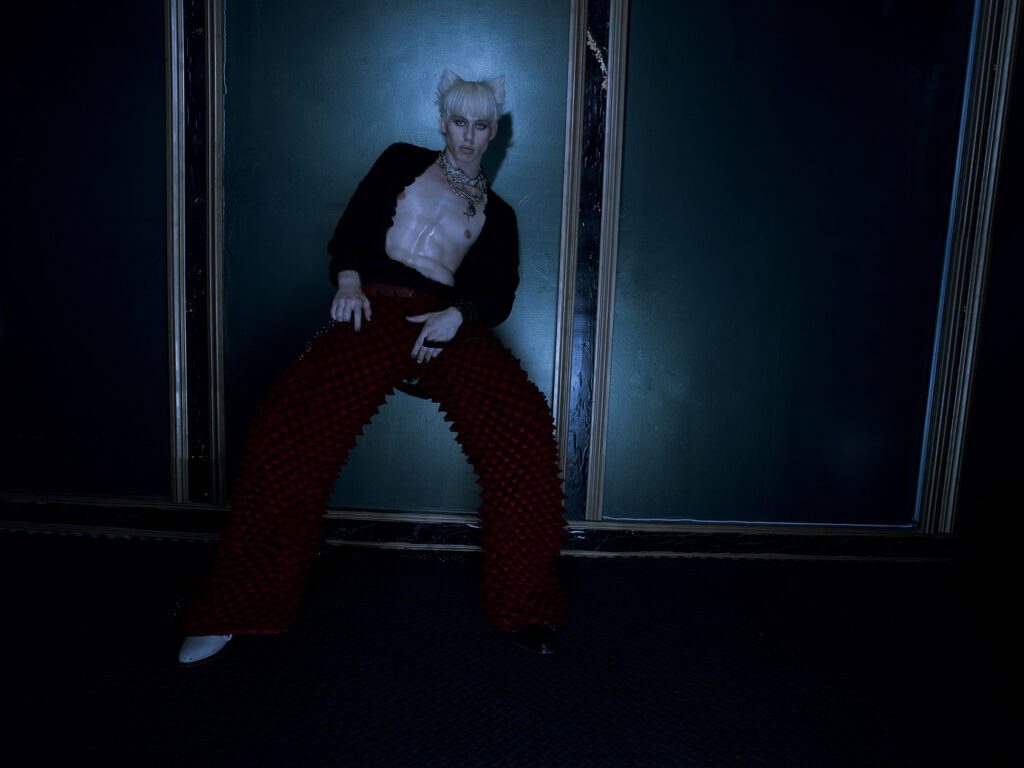
For Henderson, that aversion to a more domineering version of masculinity is personal. “I was raised by a single mom, and I had violent father figures, so I always hated that version of masculinity, and it always scared me,” he says. “It was always important, if I was gonna write about sex, to write about it from my perspective.”
That perspective doesn’t always position Henderson as the person with the power. If “i wanna be your girl” wonders whether crossing gender lines might make emotional intimacy easier, another track, “NSFW,” turns the question back on Henderson himself. Inspired by dating a woman whose career is more successful than his, the song forced him to consider the expectations he carries into a relationship simply by being the man in it.
“Am I—what is my role as the guy in this?” he remembers asking himself. “I think a lot of this project does a lot of that. Like, ‘I’m a boy, but what does that really mean?’”
But Bleach doesn’t reserve that question only for romance or sex. Later, Henderson plays “Domino,” one of the album’s most personal songs, though you wouldn’t necessarily know it from listening. He intentionally wrote it broadly enough to sound romantic. In reality, it’s about his younger brother.
“That one’s about my little brother—well, our little brother,” he corrects himself, with a glance at Bella, who has been nodding along to our listening session. “But it’s a song that I’ve disguised to be kind of open,” he continues. “It could be anything, but I think that it’s something that everybody feels.”
For Henderson, “Domino” represents a turning point in the album when the lack of depth in a relationship becomes hard to ignore. “You’re like, ‘Wow, I’m with you all the time. We say we love each other, but I don’t feel like I know you or I’m connected to you at all.’”
He sees this distance in his relationship with his brother, who was going through a difficult time. “It’s something that I felt in my last relationship and in a lot of my close friendships over the years,” he says. “I’ve always felt like an outsider even in my personal relationships. And I think it’s because of that whole thing, that performance aspect of me.”
He calls “Domino” the “reckoning point” of Bleach. And it’s an important one. His take on masculinity isn’t just about rejecting the domineering men he grew up around or finding a new way to sing about sex. Instead, Henderson circles around the nature of personal intimacy in our ever-digitizing, bleached-clean world and whether being a good boyfriend, friend, son, or brother requires getting rid of the version of yourself you think the other person wants to see.
For an artist whose public image and hit singles lean heavily into sex appeal, Bleach (and by extension Henderson) is more interested in adding layers of depth to the person behind it. He can still flirt, strip down, and make a horny pop song, but the more revealing question fans will likely find themselves asking is whether the guy at the center of all that performance can learn to let anyone actually know the real him. Or more simply put by Henderson in his title track: “Baby, the bleach has gone to my head. Stripping me clean, the old me is dead. You make me weak. Now I’m damaged.”
Words: Abid Haque
Photography: Dae & Dallas
Creative Direction: Ryan Prescott
Stylist: Lisa Smith Craig
Assistant Stylists: Jessica Batista, Essence Carson
Make-Up: Lily Nalbandyan
Hair: Livio Angileri
Manicurist: Alyssa Parker