








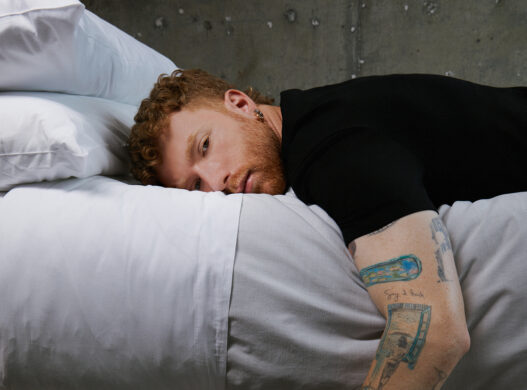
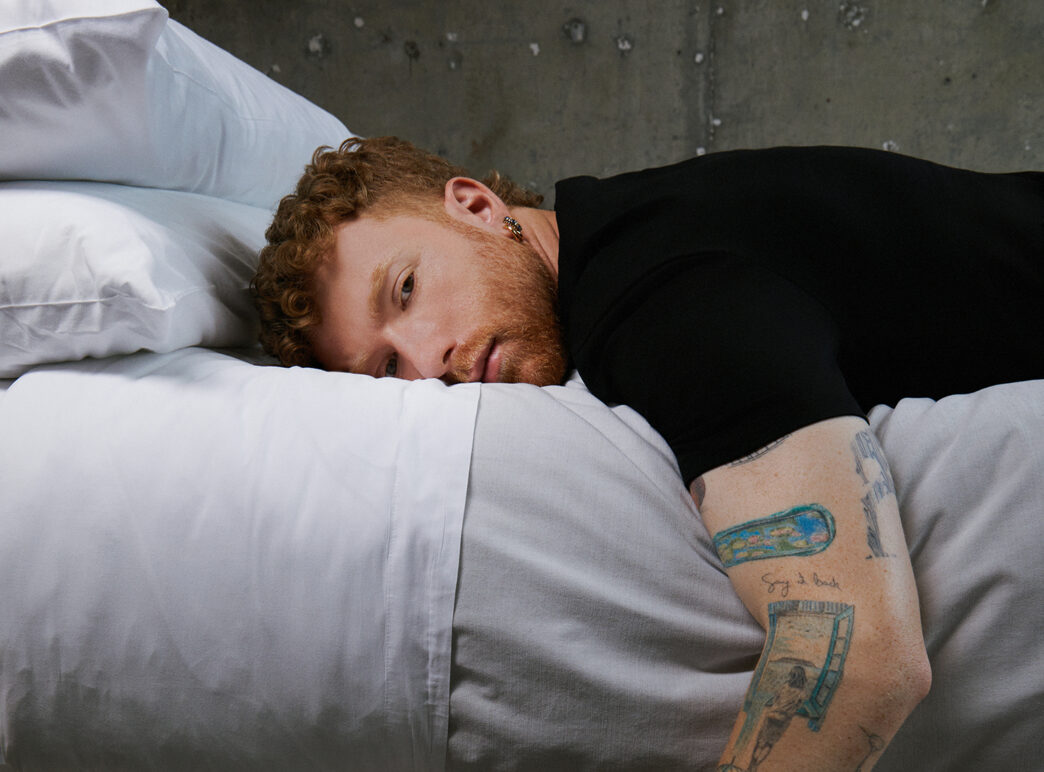
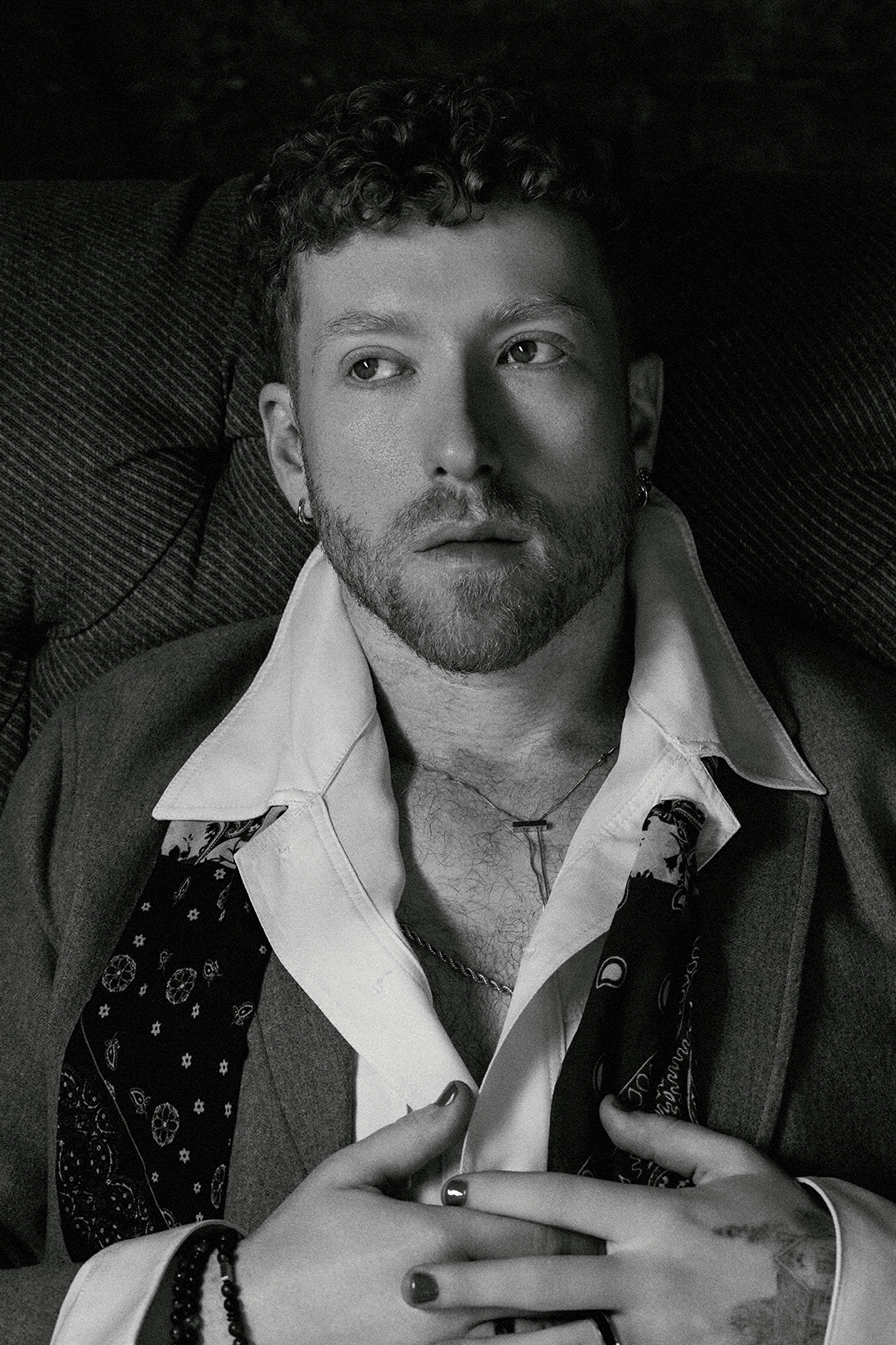
JP Saxe is on this cover for a reason that goes beyond the music. In the summer of 2025, weeks before his Make Yourself At Home tour was set to launch, he posted a TikTok to warn fans that the tour was in jeopardy. He needed to move roughly 20,000 more tickets in 48 hours or the tour was off. The industry playbook in that moment calls for silence, or a vague statement about scheduling. Saxe picked neither. When the tour didn’t sell, he confirmed the cancellation himself and followed it with a guest essay for Variety laying out exactly what happened: he simply had not sold enough tickets to venues with capacities of two to three thousand.
“I really didn’t think I was doing anything all that bold,” he says now. “I figured I was just applying the same transparency that I’ve always tried to apply to my songs. The people who mess with my music, I try not to lie to them in the music, so best that I don’t lie to them about anything else.” More than a year later, Saxe says the fallout was nothing like what he braced for. “The amount of good things, the amount of just really beautiful ramifications of being straight up about that has been a fun thing to watch unfold in my life.”
That decision—honesty in a business built on optics—cracked something open for him. In the music industry, he explains, success is often more perception than fact. “We work in a very optics-oriented profession. You’re kind of only as successful as people think you are, because nothing’s real.” Choosing to look like he was failing, instead of manufacturing a story to the contrary, felt counterintuitive. It also felt, in his word, liberating.
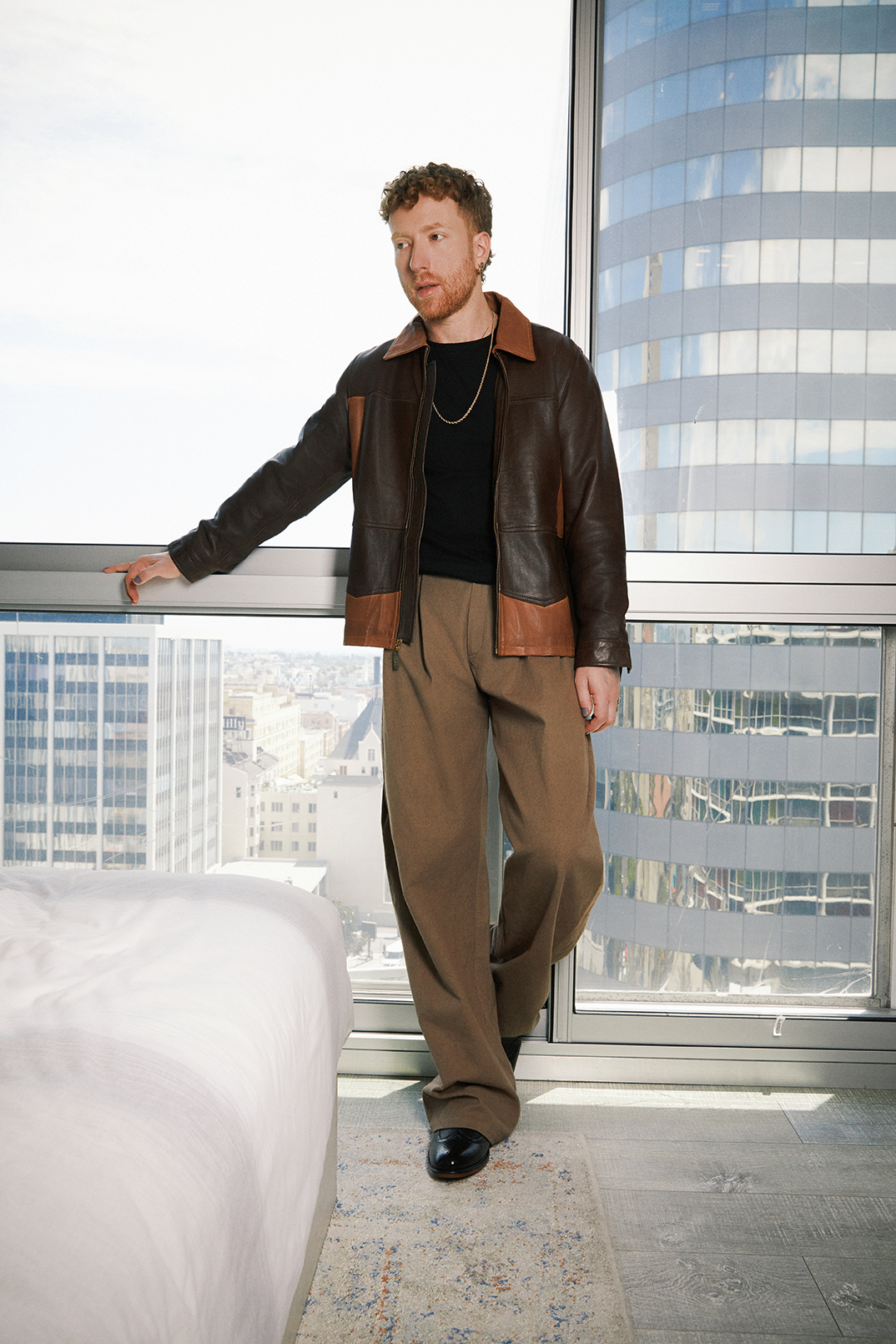
Saxe has said the cancellation ended up reshaping the next phase of his career more than the tour itself ever would have. He credited the fallout with pushing him toward a production company he started with his band, and toward becoming an independent artist.
Okay Piano Guy, out now, Saxe’s first full-length as an independent artist and his first album since parting ways with Arista, the label he spent six years and two studio albums on: 2021’s Dangerous Levels of Introspection and 2023’s A Grey Area.
The album takes its title from the track Saxe considers the record’s emotional and musical center. The concept traces back to the artists he fell for as a kid: songwriters who sit down at a piano and build something out of nothing. “Carole King sits down at the piano, writes a song. Randy Newman sits down at the piano, writes a song. Stevie Wonder sits at the piano, writes a song. Those have been my favorite records since I was like 11 years old.”
The record follows two 2025 EPs, Articulate Excuses and Make Yourself At Home, that intentionally pulled him away from the piano-and-heartbreak sound he built his name on. “Who am I without what I think are the core things that make me who I am?” is how he describes the exercise. He does not regret the detour. If anything, he credits it with getting him back to his instincts with fresh eyes. “I’m not sure I could have made this album right after Dangerous Levels of Introspection, although I think this album is the closest follow-up I’ve ever made creatively.”
His bar for what makes the tracklist is simple: if a song doesn’t scare him a little, it does not make the cut. “There’s this interview Phoebe Waller-Bridge did, early days on Fleabag, where she talks about how she knows if a scene should make the edit. If it scares her a little bit, that’s how she knows it’s real enough to be worth putting into her art.”
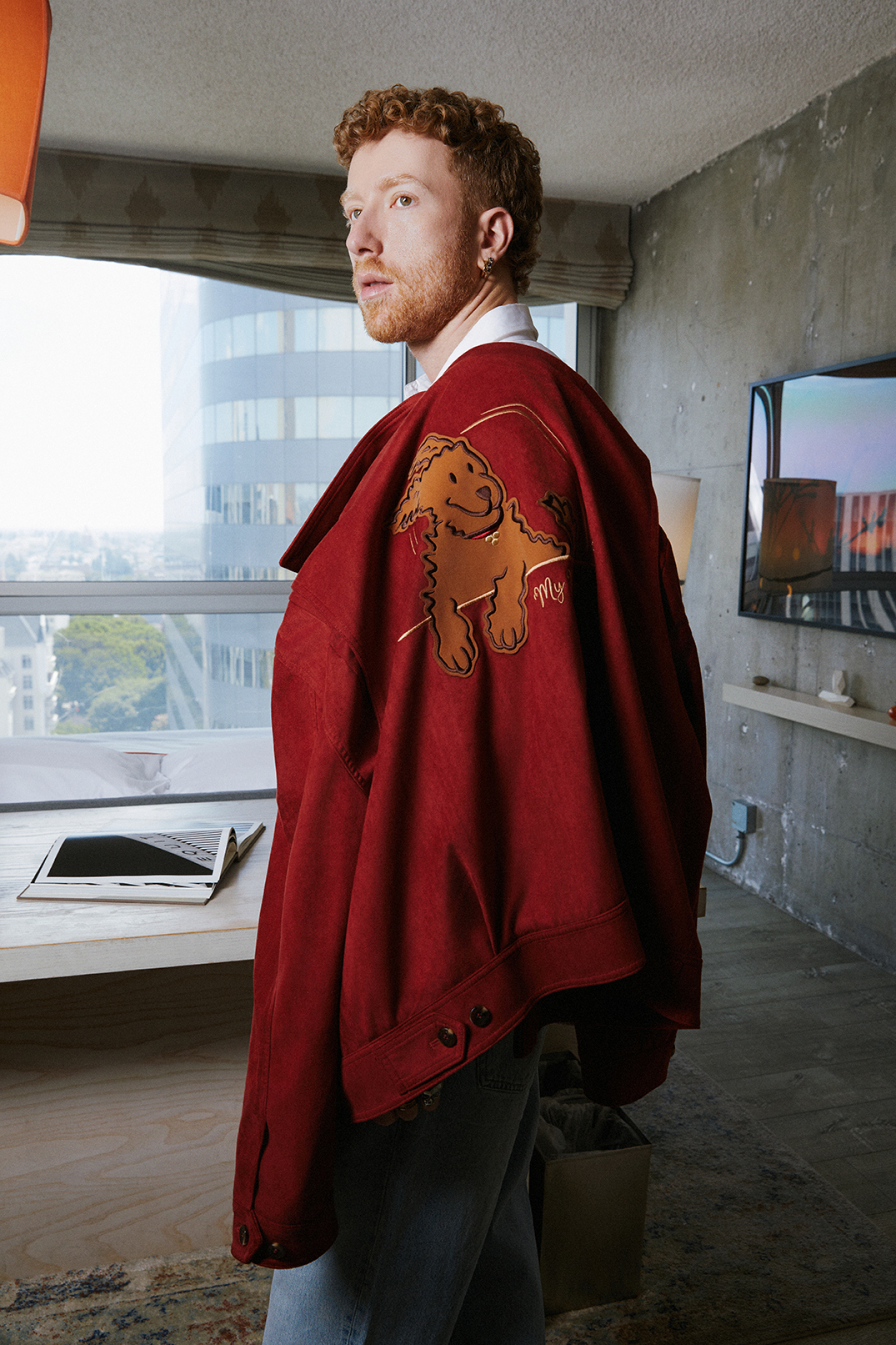
One lyric he shared, from a track called “Another Sad Story,” gives a sense of where the record lives emotionally: So even if this is goodbye, I know we said it is, but it don’t feel right. I need just a little bit more time. Can we have just one more of our Sunday nights and one last kiss good morning before we’re another sad story.
Saxe has become one of pop’s most in-demand collaborators, and the résumé keeps growing. He wrote six songs on Nick Jonas‘s 2026 album Sunday Best and co-wrote the new Jonas Brothers single, “Listen,” which came out just days before this interview. He has two songs on Camilo‘s record. And he wrote eight songs on Sabrina Carpenter’s Emails I Can’t Send, an album he calls home to some of his favorite work of his career.
“Sabrina is one of the most exciting, most brilliant artists of our time, the standard-bearer of pop music right now,” he says. “Those songs are so fucking special to me, and my hope is that there’s a lot more out of us.”
He describes writing for other artists as an extension of his own voice rather than a departure from it. “Running with other artists to me just feels like being a writer with more than one character. All my favorite writers have had more than one character. What I want to perform and sing is a limitation, and it’s a lot smaller than what I want to write.”
His duet “Man Behind the Glass” with Ashley Cooke came together the same way most of his collaborations do. “I usually know if a song is special if I start feeling that itch to sing it myself,” he says. “So I just said to her, I really love this. I don’t say this often in sessions. So I joined her on it.”
No conversation about JP Saxe over the past few years is complete without touching on “If the World Was Ending,” his breakout duet with Julia Michaels, and the widely followed relationship between the two that unfolded alongside it. Asked directly about where things stand with Michaels today, Saxe chooses his words with care and keeps the focus squarely on her artistry rather than their history.
“I have nothing but admiration for Julia,” he says. He points to what her generation of songwriters has meant for pop music at large: women writing their own stories in their own voice, rather than having them written for them. “I think Julia Michaels and Amy Allen and songwriters like them are a huge part of that. It’s not only good for pop music, but good for pop culture and culture in general, that we’re hearing artists speak from their own perspective.”
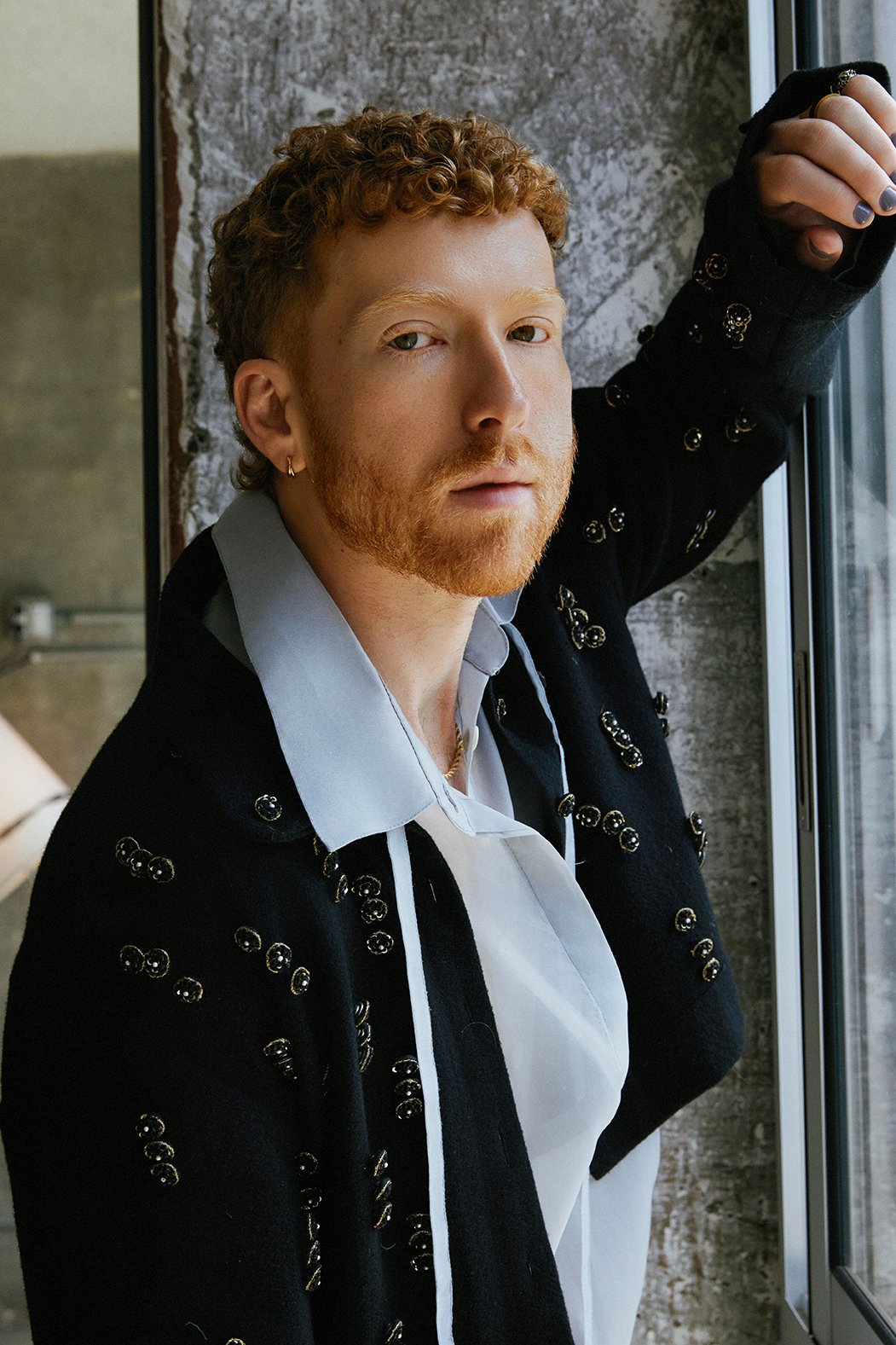
The conversation turns more reflective around another song from that era, “A Little Bit Yours,” which some fans read as a response to the end of his relationship with Michaels. Saxe doesn’t confirm or deny the read, but he speaks candidly about what it is like to keep performing something so tied to a specific chapter of his life. “Songs start out as something that allows you the catharsis of taking a feeling that is in you and putting it in something external,” he says. “Fast-forward a few years, and the same song that took the feeling out of you originally is now putting it back into you on a regular basis. That can be occasionally emotionally confusing, because it makes feelings from the past seem more present than they are for you as a person, because they are present for you as a performer.”
Saxe’s origin story runs through Babyface‘s old studio, Brandon’s Way, where he landed at eighteen after moving to LA with nothing lined up. He met a producer named Khris Riddick-Tynes through a friend at a local open mic, wrote a song, and got invited back. And back again. At one point, in a detail he had never told anyone until recently, he spent a week sleeping in his car outside the studio waiting for a callback.
It came. Over the next three years, under the mentorship of Tony Dixon, Kenny Edmonds, and JQ Smith, Saxe learned the craft from the inside. “They taught me how to write songs,” he says simply.
One of the studio’s other regulars, producer Dewain Whitmore, would come through to write with Dixon, Edmonds, and Riddick-Tynes, and Saxe admired him from a distance for years without ever getting the chance to work with him. “Dewain was always such a sweetheart to me, but we never worked together,” he says.
More than a decade later, the two finally ended up in the same room, in the first Jonas Brothers writing camp Saxe was part of. He told Whitmore he’d been wanting to work with him for years, he says, as “a dorky ginger Canadian who was always there” at Brandon’s Way. They wrote together for the first time that week. “We immediately lock in, as if we’d been writing together our whole lives,” Saxe says. “Spoke the same language, same instincts, that sort of mystical thing that happens when you find a collaborator.”
That partnership produced several of the songs Saxe wrote for Nick Jonas’s album, and it’s Whitmore who co-wrote “When I Lose You,” the lead single off Okay Piano Guy. The two have stayed close since, at one point catching up backstage before a show, trading stories from the Brandon’s Way days before Saxe walked out to perform on the same floor where the Lakers play. “The moments onstage are cool,” he says, “but the moments backstage with the day ones are cooler.”
Since the cancellation, Saxe has been rebuilding his live career from a different angle entirely: as direct support on Megan Moroney’s sold-out arena tour. “God got that bug back in me,” he says. “I want to be up here for more than thirty minutes.” Top of his wish list is a proper Canadian tour, hitting cities like Halifax, Moncton, and Winnipeg that the Toronto native has never played. He points to watching John Mayer play arenas solo as proof that scale and intimacy are not mutually exclusive, and expects his own live show to grow the same way: piano and stories first, bigger rooms eventually.
Asked what he would tell an artist considering their own bold, career-risking leap, Saxe does not hesitate. “Deciding to be an artist is an absurd thing to do. It is an inherently reckless, absurd, non-pragmatic choice. So once you have decided that you are going to spend your life being an artist, it is quite silly to then decide you’re going to be pragmatic about being an artist. If the goal is pragmatism, go get a finance degree. Once you have chosen to live a life making art, it’s inherently a risk. It feels so hypocritical to not then continue to be creatively bold within your inherently risky choice.”
Words: Chauncy Jackson
Photography: Roman Udalov
Creative Direction: Ryan Prescott
Stylists: Shatora Adrell and Lisa Smith Craig
Hair & Make-Up: Christina Spina
Nails: Amber Studer
Shot at: The LINE Hotel LA