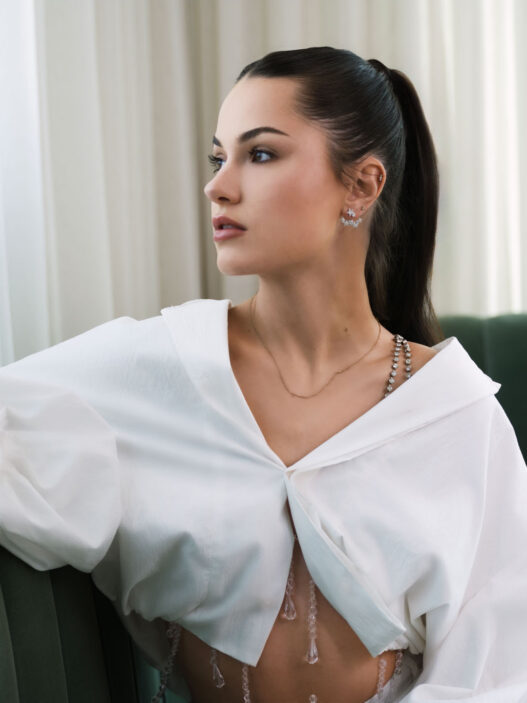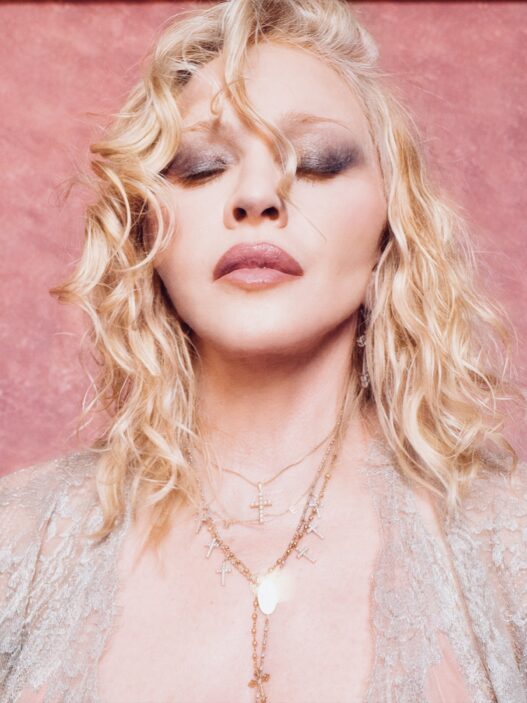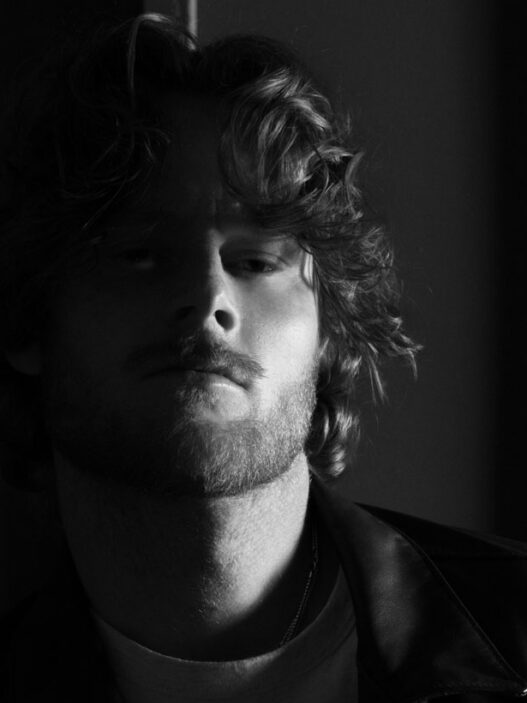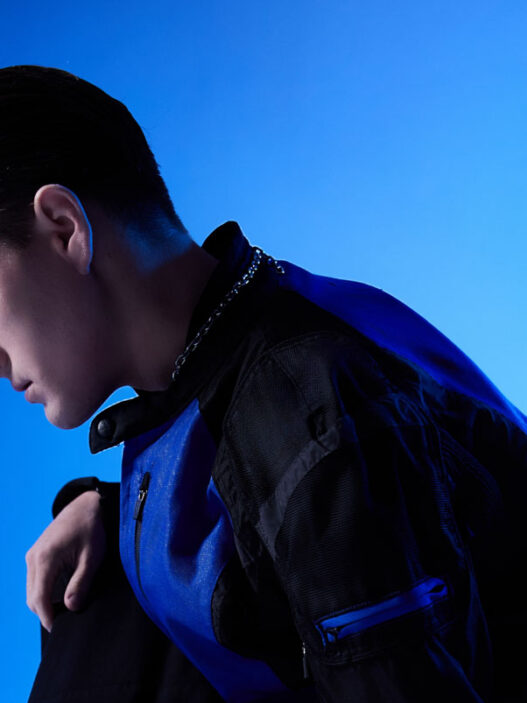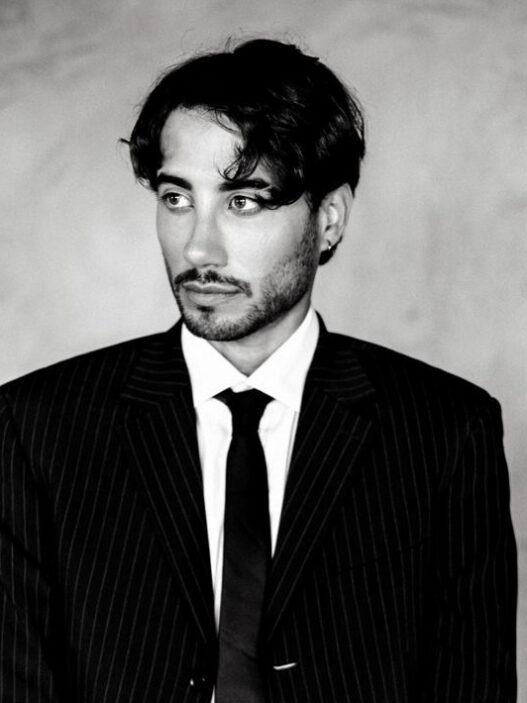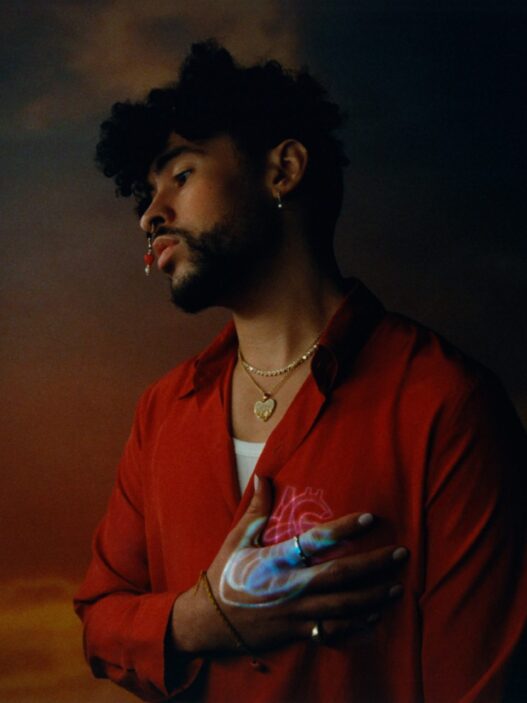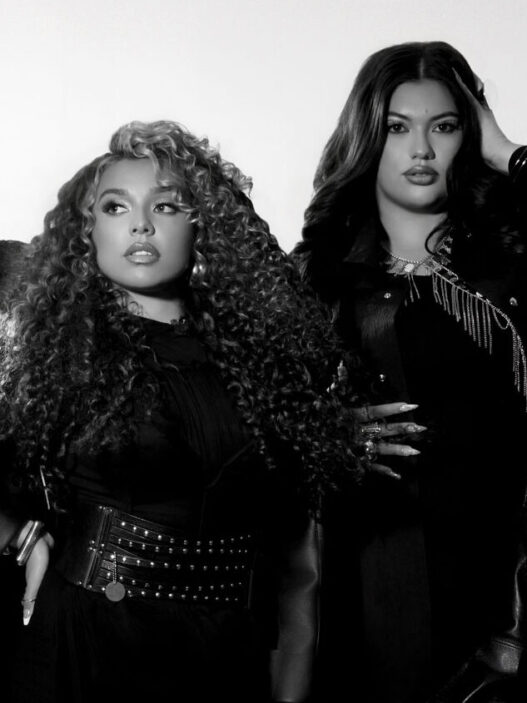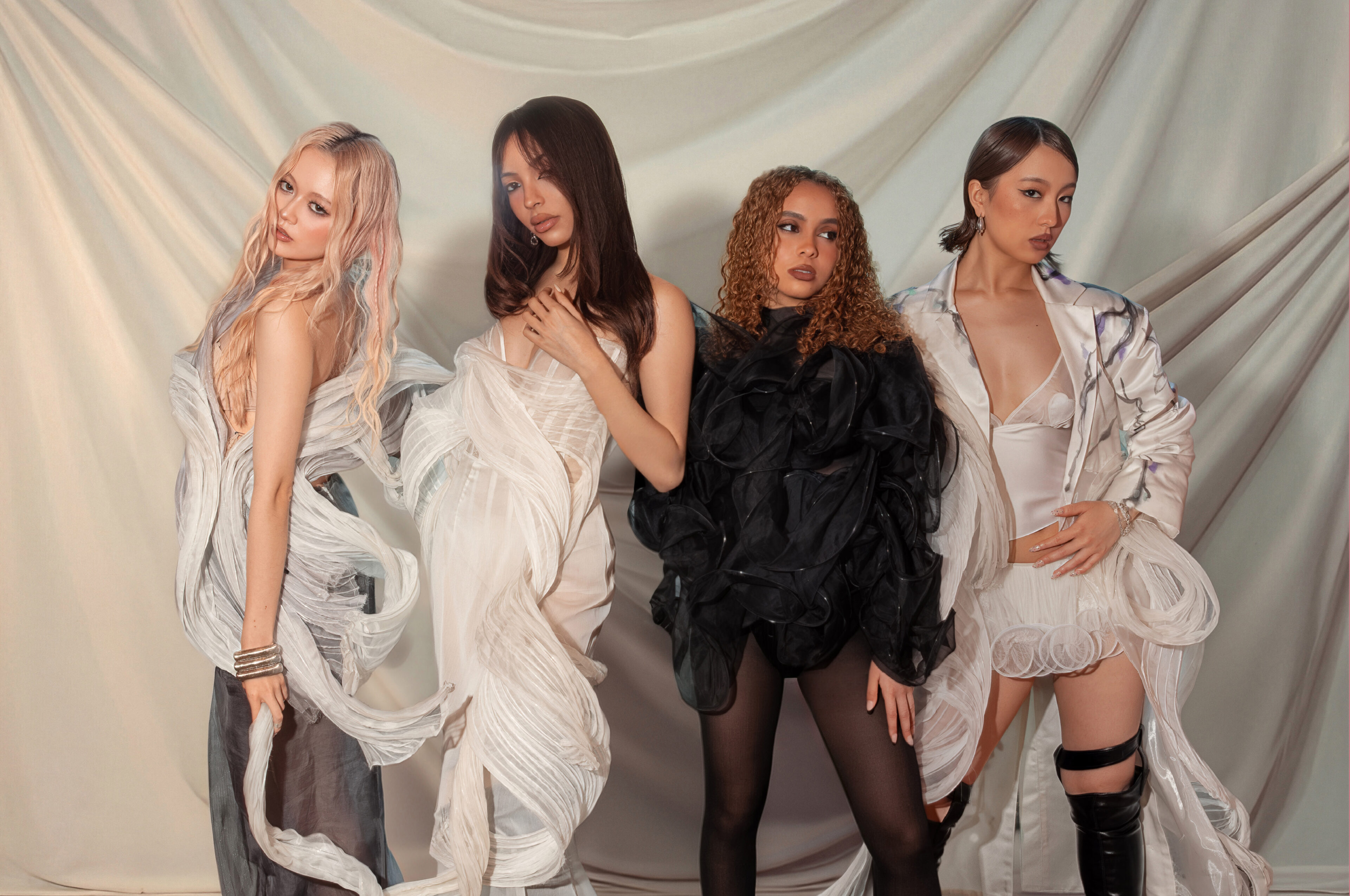








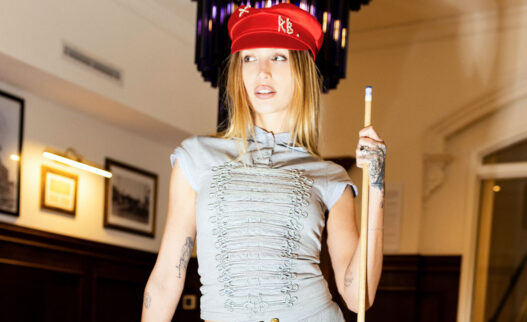
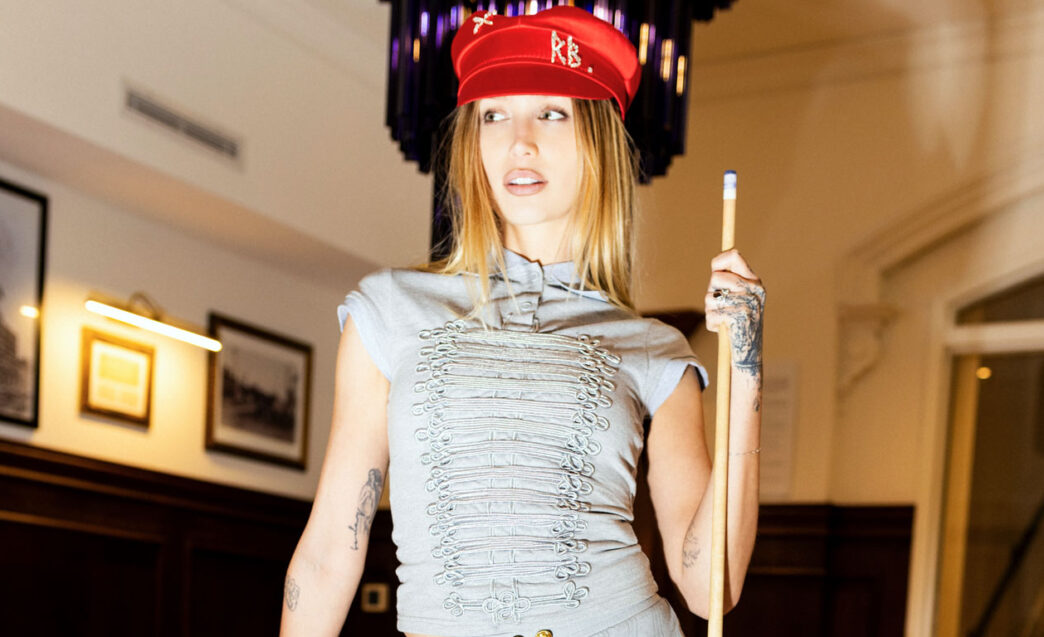
There is something disarming about the way Cailin Russo answers the question of what this chapter of her career truly feels like. Not the public version, she clarifies — the private one. Her answer arrives in a single, unhurried word: focus. For an artist who has spent years shape-shifting through identities — model, muse, punk frontwoman, experimental pop auteur — that word lands with the quiet authority of someone who finally knows exactly where she’s going.
Russo grew up in San Diego with rock music woven into her DNA. Her father is Scott Russo, the lead vocalist of the punk band Unwritten Law, and in 1998, he wrote a song for his daughter — “Cailin” — that reached No. 28 on the Billboard rock chart. Music was never a foreign language for her; it was the house she was raised in. She began experimenting with songwriting as a teenager in her father’s home studio, and by the time she stepped in front of a camera for Justin Bieber‘s “All That Matters” video in 2013, she had already been quietly building something of her own.
That Bieber moment introduced her to a global pop audience overnight. She reprised a similar role in his “Confident” video the following year, and her visibility exploded. But rather than lean into the celebrity-adjacency that might have defined a lesser ambition, Russo pivoted hard toward her own artistry. In 2017 she released her debut solo single “September Rose,” which topped HypeMachine and accumulated millions of streams. The following year she fronted the band RUSSO and released the EP House with a Pool — the record on which she first recorded “Bad Things,” the song that would, years later, change everything.
When HBO’s hockey romance drama Heated Rivalry rolled “Bad Things” over the end credits of its season one finale in late 2025, the response was immediate and overwhelming. The song shot to the top of the Spotify Viral 50, landed on the Billboard Emerging Artists chart and Shazam Most Viral listings, and reached No. 5 on the Billboard Rock Digital Song Sales Chart. Fans who discovered Russo through the show — many of them from the LGBTQ+ community that embraced the series deeply — went digging through her catalog and stayed. She has spoken publicly about how much that particular connection means to her, describing it as something “so wholesome, iconic,” and emphasizing her pride in creating a safe space for LGBTQ listeners.
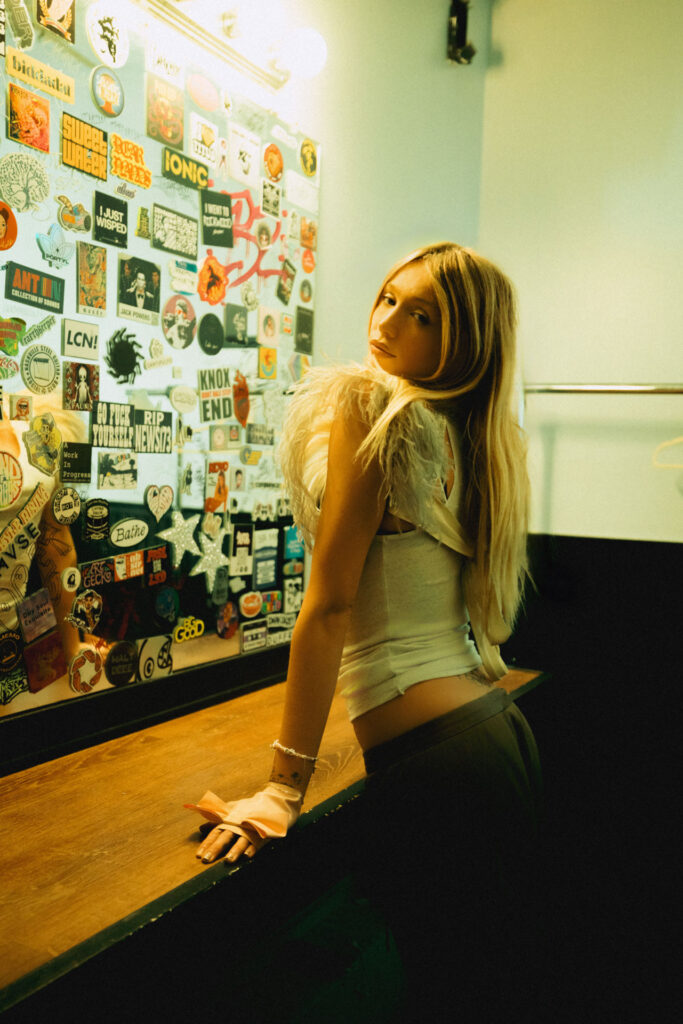
But she is honest about the complexity of the moment. “It threw me through an identity crisis,” she has said of the experience. The Russo who recorded “Bad Things” in 2018 was 24 years old.
The Russo receiving that song’s second life is a different person — a Grammy-nominated songwriter (she co-wrote “Hurricane” for Kanye West‘s DONDA, featuring The Weeknd), a seasoned festival performer who has played Lollapalooza and Reading & Leeds, and an artist who released her album INFLUX in 2023. Bridging those two selves hasn’t been effortless. “It’s actually been quite difficult for me to bridge that gap emotionally and sonically,” she admits. “I’m just being gentle with myself as much as possible while having people join me in the present wave I’m on.”
Ask her where a new listener should start, and she points first to INFLUX — her “pride and joy project,” she calls it, the work she considers most innovative and most fully herself. Then to “Pineapple Crush,” which she describes as warm and welcoming, a gentler entry point. Her sound, she says, is best understood as confident — a collision of rock instincts and experimental curiosity. That word, confident, feels carefully chosen. It describes an aesthetic, yes, but it also describes a stance.
Her songwriting, she says, has not changed dramatically over the years — she remains “compulsively honest,” she puts it — though she is consciously trying to embrace more candor around sensuality. She lives on a pendulum between the urge to make pop music and the pull toward something more tastemaker, more oblique. She used to create in a perpetual mental state of golden-hour warmth: nostalgic, euphoric, soft at the edges. Now she is drawn to more obscure terrains. Something simpler, but with a stranger flavor.
She has always thought visually. Being a self-described film junkie means the language of cinema has long informed how she approaches a song — its atmosphere, its arc, the feeling of a particular scene. The Heated Rivalry experience has deepened that instinct. “I’m already a film junkie so now I will definitely be allowing that to inspire me,” she says, and you believe her. There’s a cinematic quality to her best work — the sense that each song is the soundtrack to something just off-screen.

When “Bad Things” went viral, Russo felt the full weight of the pressure that comes with a moment like that. She collapsed behind the scenes, she admits without apology. “Something going viral can be a very isolating experience,” she says. “I have to take a lot more time to be by myself to process what’s going on so I can connect when I’m with other people again.” It is the kind of answer that reveals exactly who she is: someone who prizes authenticity enough to say the uncomfortable thing rather than the expected one.
She is channeling all of it forward now. A new EP, DON’T, arrived in March alongside her lead single “I Can’t Help You Now,” and she brought old and new material to audiences on her Bad Things Tour this spring. For listeners finding her for the first time through the Heated Rivalry moment, she’d send them next to “Fade.” And for those already familiar with her catalog, she is making clear that what’s coming is worth the wait. The album rollout is where her full attention lives. The visuals are in motion. The focus is total.
When her father wrote a song for a baby girl back in 1998, he perhaps could not have imagined the artist she would become — restless, uncompromising, perpetually evolving. But the lineage is clear. Rock music is in her bones, and she is doing something singular with it: bending it toward the future, one honest song at a time.
Photographers captioned above.
A version of this story appears in the Summer Issue issue of Groovevolt.