





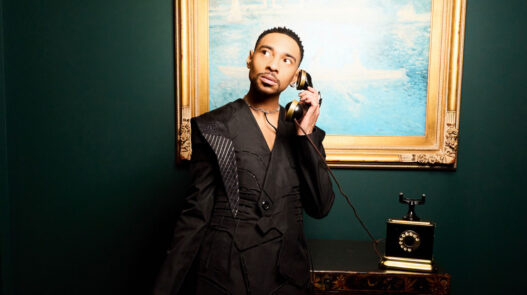
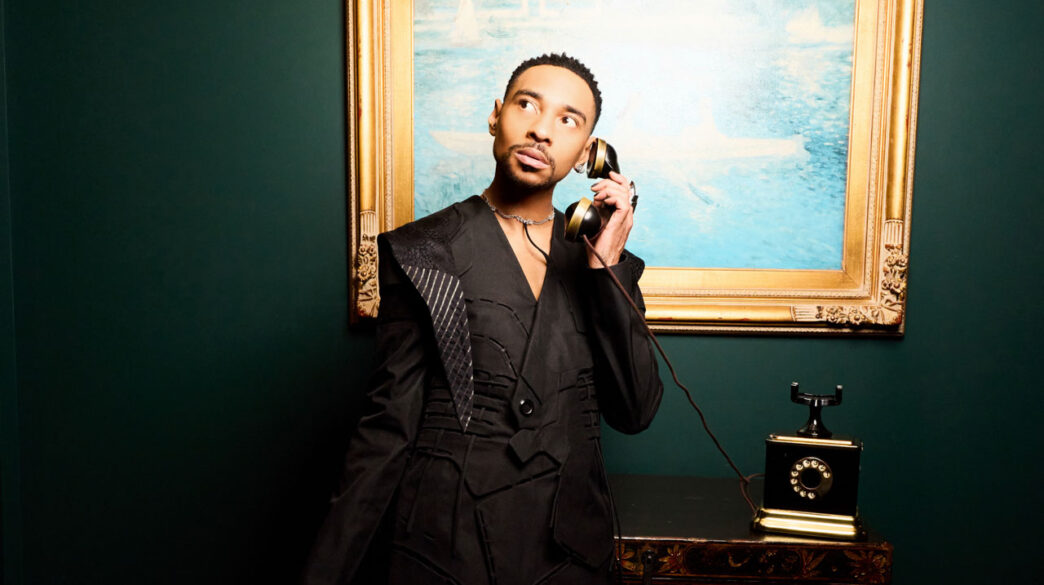
Some artists make music. Others make experiences. Grammy Award-winning singer-songwriter Durand Benaar belongs firmly in the second category — a fact that R&B legend Chanté Moore understood long before the rest of the world caught up. In an intimate, wide-ranging conversation, these two generational forces sat down to talk legacy, vocal care, identity, joy, and what it really means to be “already ready.” What followed was less an interview than a mutual celebration, two artists who love music deeply, pouring into each other freely.
Chanté Moore: When you think about your place in R&B — how do you define yourself? Do you just call it R&B, or something else entirely?
Durand Bernarr: I always say, I’m not something that’s meant to be understood — I’m meant to be experienced. It’s all about the feeling I bring. Is it honest? Does it make you feel seen in a place that hadn’t had any light shined on it? Do you feel heard in a way where you can now speak up for yourself? That’s the kind of thing I like to incite. I like to incite peace. I like to incite laughter and joy. So it’s really whatever it is that you want it to be. I was raised on R&B — that’s one of my first loves — but I’m not something that fits neatly in a box.
Chanté Moore: Who was your first real musical love? The artist that made you realize what music could do?
Durand Bernarr: It would have to be Badu — but that’s not R&B, that’s neo-soul. I was eight years old. But then Brandy, right after that. June 1998, I was nine, going on ten, down in Cleveland at one of the amphitheaters. C-Note, 702, and Silk opened up. And that was the first time I ever heard “Love You.” I was like — you can do that with your voice? And then Brandy came out and opened with “Angel in Disguise,” and because I was so little, I made my way to the front. My dad was at front-of-house because he was working the audio engineering account. During “Almost Doesn’t Count,” she handed the mic to DeShawn, and DeShawn sang the last part. It was just such a magical night.
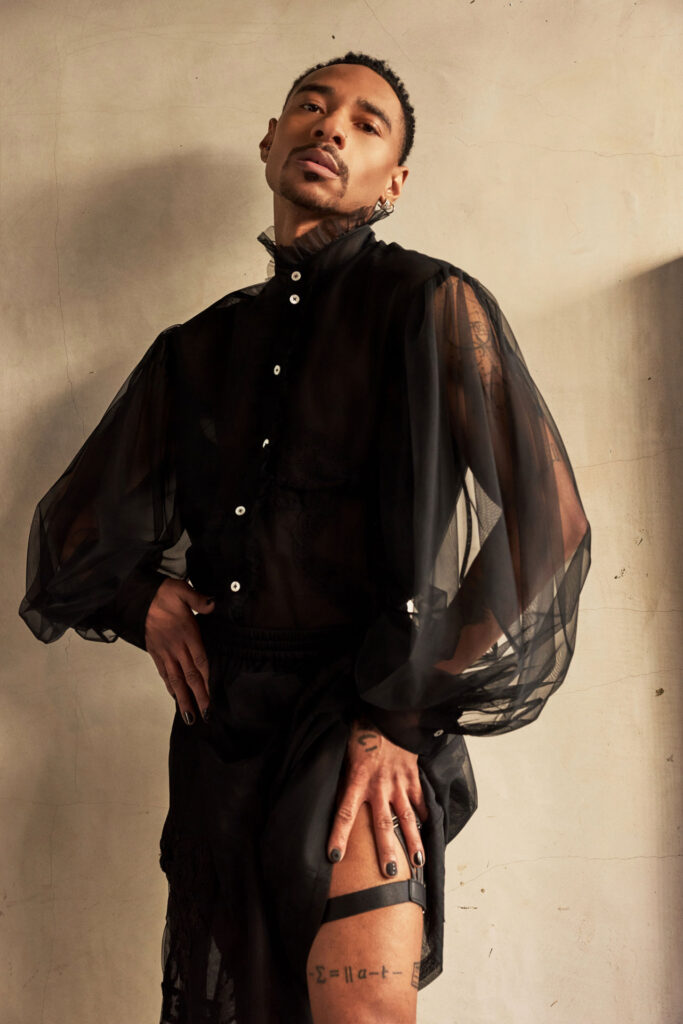
Chanté Moore: You have mastered that stage. You make me forget that I do what you do — I’m watching you and I’m like, how does he do that? Did you dance before?
Durand Bernarr: I can dance — I’m not a dancer. Because when I think about a dancer, I think about Alvin Ailey, I think about Juilliard. But I can keep a rhythm. It started with Britney Spears — I learned the choreography to “Oops… I Did It Again.” Then NSYNC came out with “Bye Bye Bye” and I learned that choreography. And then Beyoncé came out with “Crazy in Love.” It premiered on a Friday and I had to watch it before I went to the skate rink because I was going to learn that choreography.
Chanté Moore: Feels like music has always been part of your DNA. Can you talk about your family’s influence and the legacy that continues to show up in your work today?
Durand Bernarr: On my mom’s side, her father — Ralph Malvin — taught himself how to play piano, then taught my mother. They were in a trio that played around the city. She sang, he played piano, and someone else was on drums. From there, my mother taught music in elementary schools right out of college, and also led praise and worship at churches all over the city. My father sang in a group when he was a teenager called the Dale Tones. He also played bass in church, and around 1988 or ’89 he got into audio production. So music is just what we are. I’m a continuation of who they were to each other — and still are.
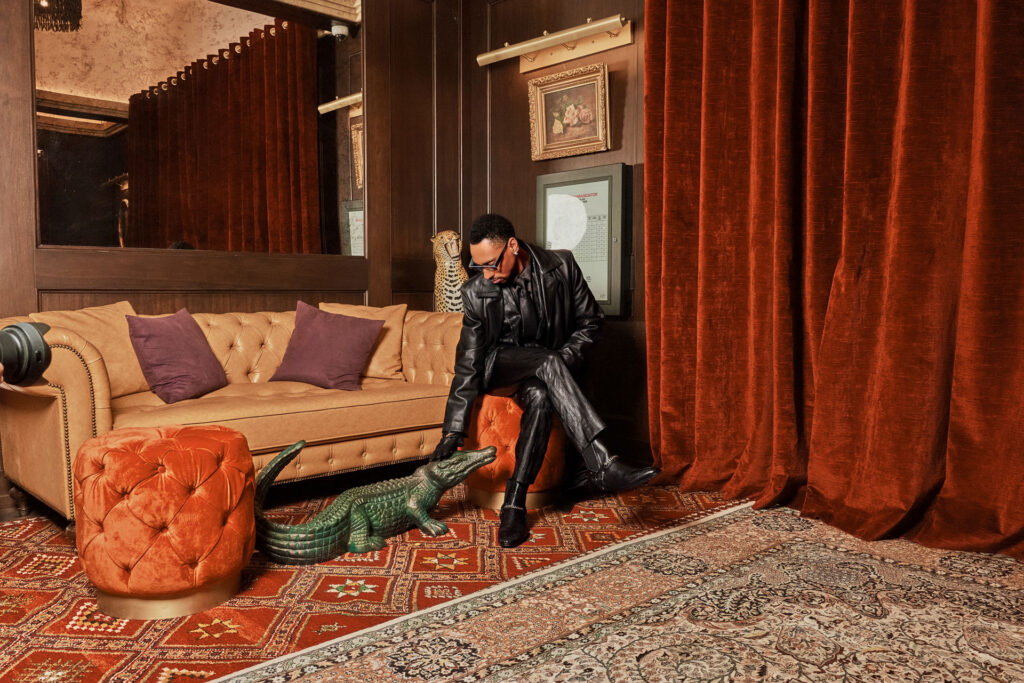
Chanté Moore: Before stepping fully into your own spotlight, you spent time as a background vocalist. What did that season teach you about discipline, humility, artistry, technique?
Durand Bernarr: I want to preface this — I’m still doing background. I still sing with Erykah Badu. If she ever needs me, I’m there. I get a chance to be part of the bigger picture, and I don’t always have to be the center point. When I’m doing my show, I’m exerting every myriad of my body — high kicking, doing all this stuff. With Badu, depending on the set list, I’m only giving about 35% of what I’d load for my own show. But more than that, it has taught me — and continues to remind me — that I have the skill to command the center as well as blend with other voices and offer support. That for me is so gratifying. It is a complete mindfuck for people. To do my Tiny Desk one year and then help her with hers as creative director and sing background the next — they don’t understand. And I get so excited just to be there.
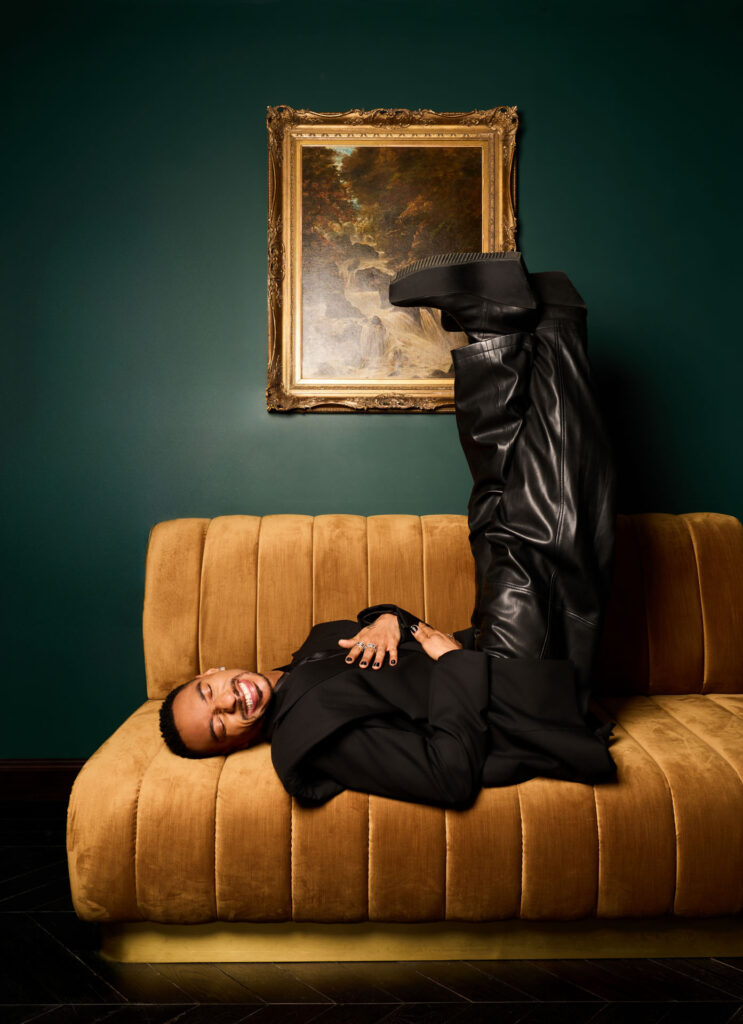
Chanté Moore: R&B has always been about feeling, storytelling, and connection. What do you believe is essential in keeping that spirit alive in today’s sound?
Durand Bernarr: I was raised on Earth, Wind & Fire, Luther Vandross, Chaka Khan, Rufus, Badu, Sade, Maxwell, Donald Byrd, Isaac Hayes, Curtis Mayfield, Roy Ayers — artists who told stories with music sometimes without even needing words. They let it breathe. It builds. Donna Summer would just let that thing build, instrument by instrument. I want to remind people to let the music breathe. I am absolutely a descendant of that — a child, a grandchild, a nephew, a cousin of all that. And it’s important for me to be true to that core sound while also branching out. Not every project needs to sound the same. But there’s going to be a consistency — because I am who I am.
Chanté Moore: As vocalists, we carry emotion in every physical way. How do you protect your voice — technically, emotionally, physically? Are there rituals, things you won’t do on show day?
Durand Bernarr: I don’t smoke on the road. Not because I can’t get away with it, but because people are giving me their time and their coins — so I give them my best. I also get my face steamer going, take naps, and get rest wherever I can — even in transit between the hotel and an interview if it’s 45 minutes away. Nourish yourself. I think about our sister Megan getting exhausted from her Broadway show — eight shows a week, every week, is insane. We have to listen to our bodies. Stretching is so important, especially the hips — we carry so much tightness and trauma there. I go to Stretch Lab, get sports massages. Hot water in the morning instead of coffee. And when I really need it before a show, IV vitamins — oral supplements only absorb about 20% anyway, so sometimes you just need it straight in the vein.
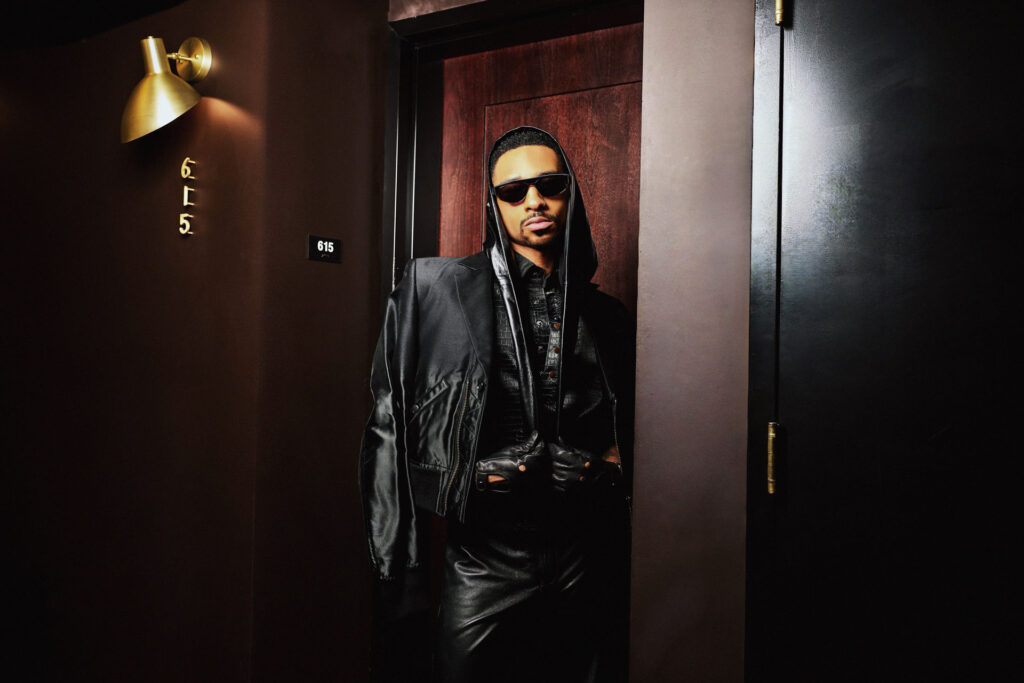
Chanté Moore: The Grammy was a powerful moment. I screamed and hollered for you. What does that recognition mean? What does “Grammy Award-winning” feel like when it’s in front of your name?
Durand Bernarr: It feels like a musical doctorate. It is now a part of my resume — it is in front of my name. Grammy Award-winning singer-songwriter Durand. But at the core of my gratitude is that my parents are still in this realm to experience the results of all that they poured into me, invested in, supported, encouraged. Look how far. I’m just a continuation of who they were to each other, and still are. As for where I’ll put it? I feel like it belongs in my studio — that’s where I’m working. Maybe you have to make your way through my space before you actually see it. Kind of earn it.
Chanté Moore: Coming from a generation that deeply valued vocal excellence and storytelling — what do you feel artists in that era got right that still resonates today?
Durand Bernarr: Those artists didn’t have the luxury of punching something in to make it perfect. It was a take — or you had to practice it before you got in the room, and you knew exactly what you were going to do and how. I also want to be clear: I love music that isn’t made by vocalists. I’m not a music snob in that sense. If it feels good, that’s it. You don’t have to be able to do what I do. The vocal ability part of being a successful act is only about 12 to 15% of the whole thing. You’ve got to have a hit record first, then stage presence — can you command an audience, can you garner their attention for that long? And right now people’s attention spans are short. They don’t even want to hear the full song. Songs don’t even have bridges anymore — and that’s why I’m bringing them back.
Chanté Moore: You have this joy that’s always present — even in stillness. I see it in you. How do you describe the difference between happiness and joy in your life?
Durand Bernarr: I look at happiness as the checking account and joy as the savings. Though I think my joy might actually be the checking account and peace of mind is the savings — because peace of mind is present, and there are things that can disturb it. Sometimes it gets a little overdraft. But my joy, even within all of that, has not been tampered with. And when Jennifer Lewis told me that my joy is feeding people in parts of the world I have never even set foot on? That feeds me.
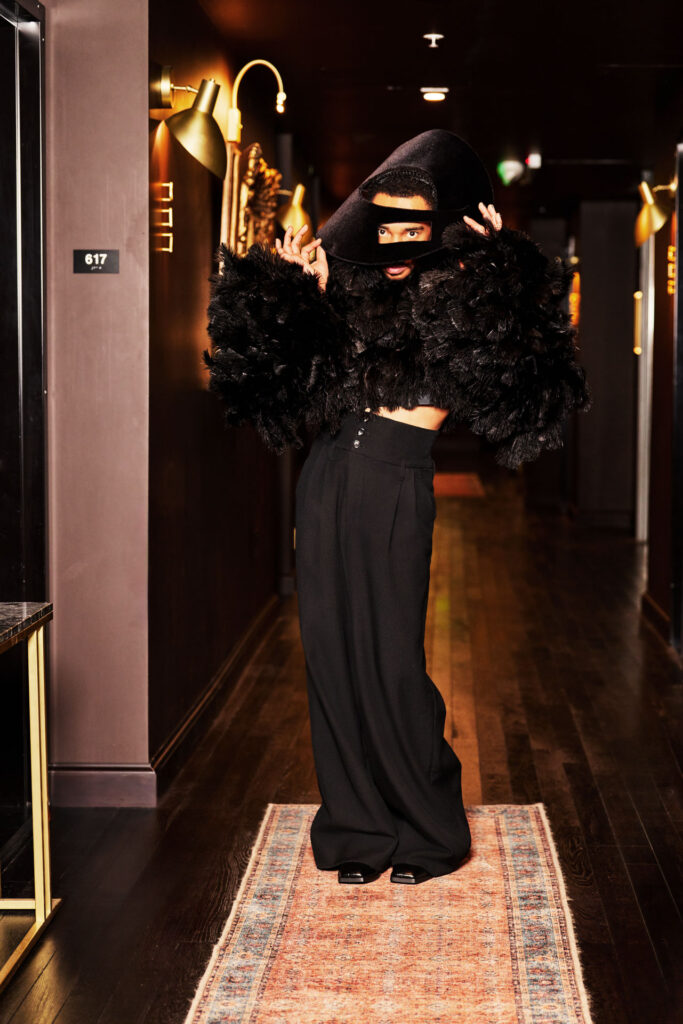
Chanté Moore: Do you find that people have gained more confidence about their sexuality and identity through you — because you are so free and clear about who you are?
Durand Bernarr: This isn’t only inspiring people in my community — the LGBTQ community. It’s also inspiring people who are heterosexual. People who are just shy. It’s inspiring people to want to be better parents to their children. It’s inspiring people to want to be more honest with who they are so they can build stronger bonds. It goes beyond the music. One of my babies — Dexter Jordan — grew up watching me and Ari Lennox on YouTube. Within the same year, he and I did a song for his project, and then he got a gig singing background for her. How cool is that?
To share a stage with one of your favorites and also to have been part of their discovery? I’m just glad to be part of someone finding themselves.
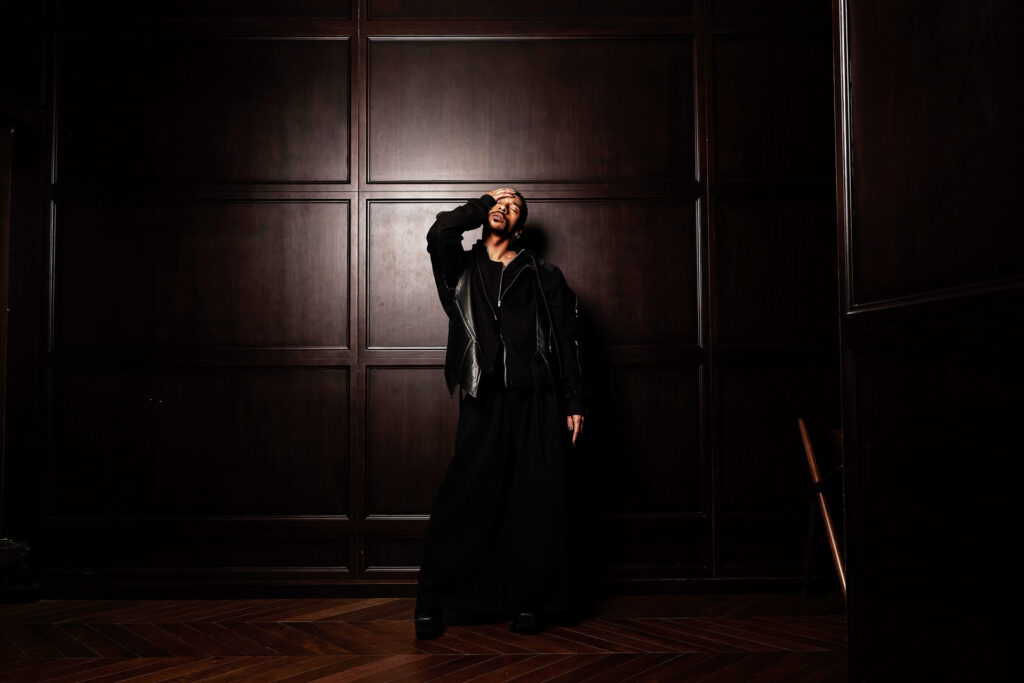
Durand is wearing a jacket and pants by LARUICCI, vest by VENIA COLLECTION, and boots by RICK OWENS.Chanté Moore: What still excites you about your future? What’s the goal — or is it just excitement about what’s coming?
Durand Bernarr: I would love to have a talk show. I want to get into acting and do something serious — play a villain. I want to do voice work. I’d love to be in a horror film. Action — Kill Bill is my movie. I’d love to be in a series. And if I’m being honest about the career I want, it’s a hybrid of Missy Elliott and Samuel L. Jackson — with an honorable mention to Babyface. Missy never gets into drama, she’s collaborative, she raps, sings, produces, brings people together. Babyface writes for others, produces, sings background. Samuel — there’s almost never a script he turned down. Whether he was the lead or in the film for 12 minutes, he made it his. That’s the career. And you know what? I’ve been putting out projects since 2009, and I got a Grammy in 2026. That’s what’s going to happen to you later on too.
Chanté Moore: What do you want the audience to take home with them — what do you never want them to lose, once they’ve seen you live?
Durand Bernarr: First and foremost — to be inspired. The worst thing for me is for you to leave a show of mine uninspired. If you’re giving me your undivided attention, the very least I can do is pour into you so you leave better than when you came. My first lady at the church I joined as a teenager used to say, “Give us six months. We promise your life will never be the same again — in the most best way.” In my case, it’s just give me 60 minutes. I’m going to take you on a ride. And when I can be excited and still have a stillness within my body at the same time — that’s when it goes from excitement to just gratitude. Just warm gratitude. And warmth will relax you.
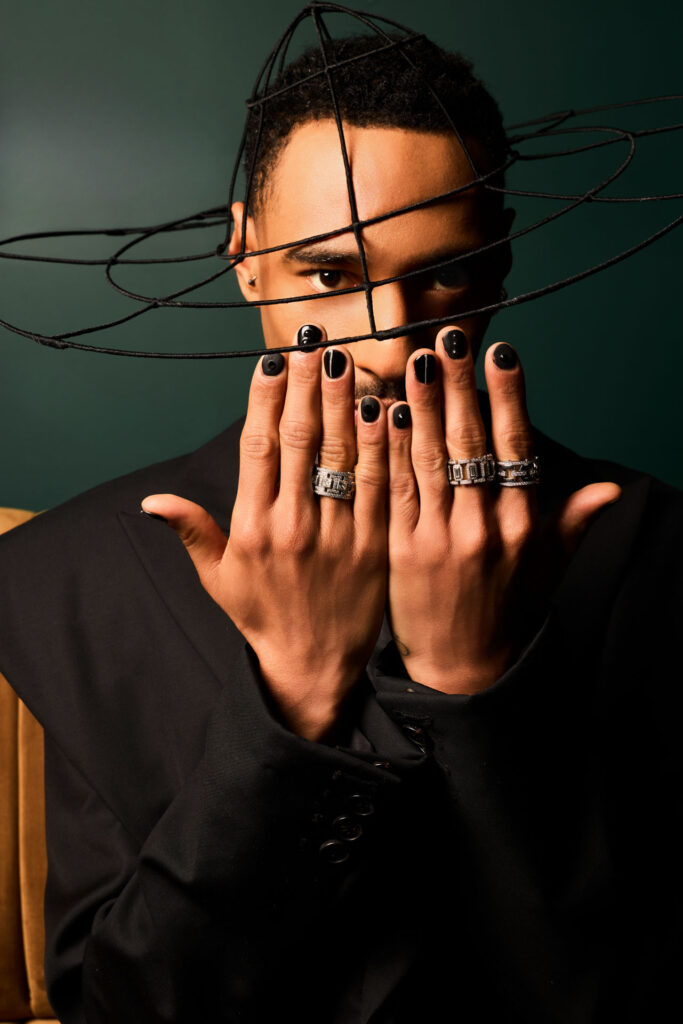
Photographer: Laretta Houston Stylist: Lisa Smith Craig and V. Smith Stylists Assistants: Essence Carson and Devontae Goodwin Hair & Makeup: Melanesia Hunter Nails: Amber Studer Shot at: Whisky Hotel LA
A version of this story appears in the Summer issue of GROOVEVOLT.