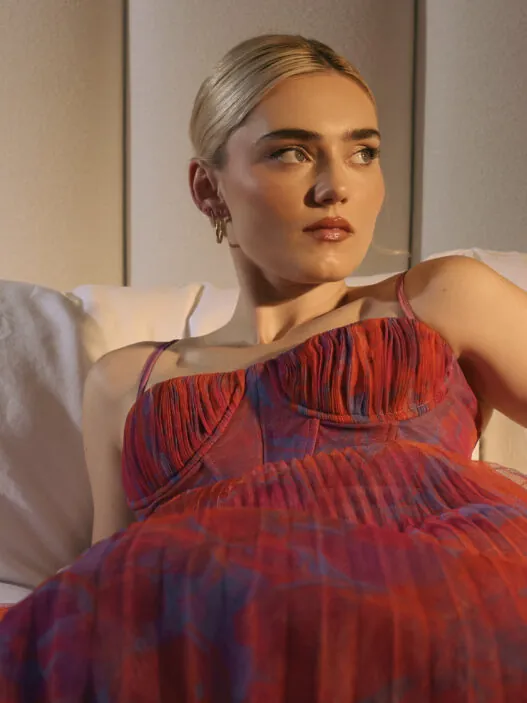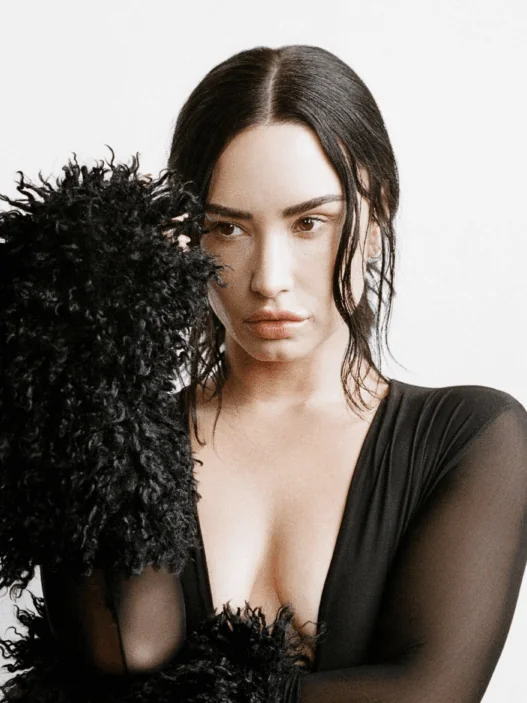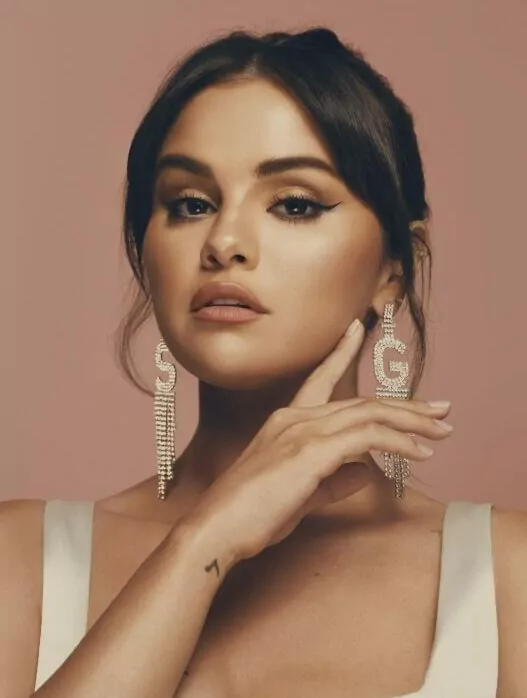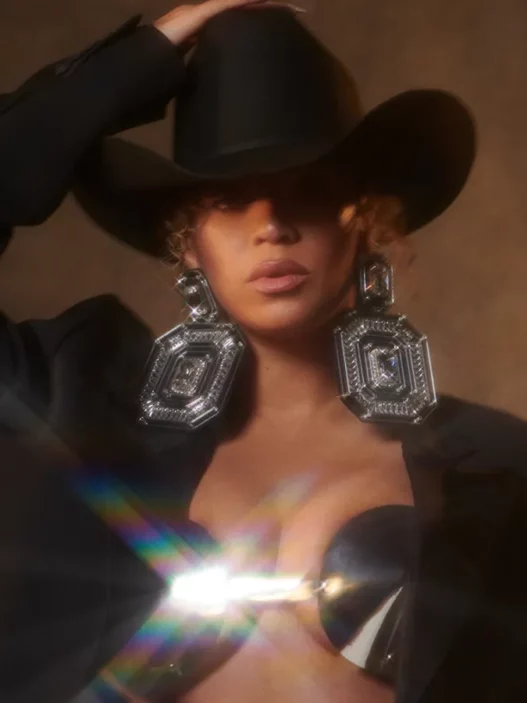


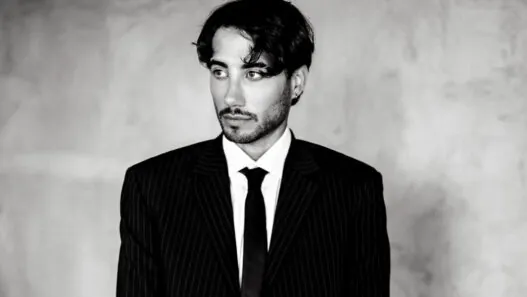

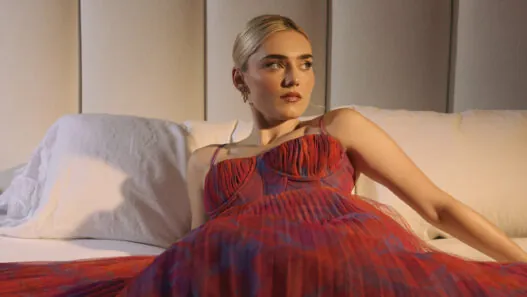



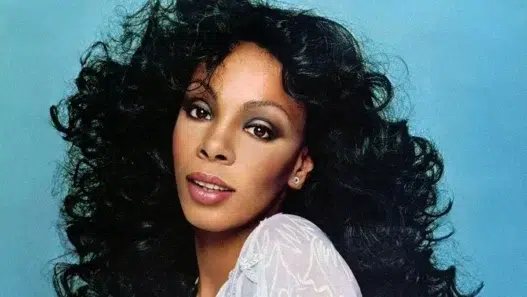
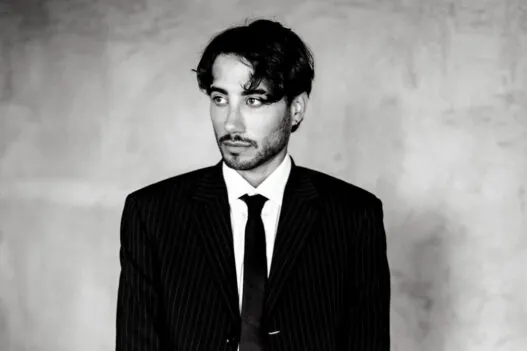
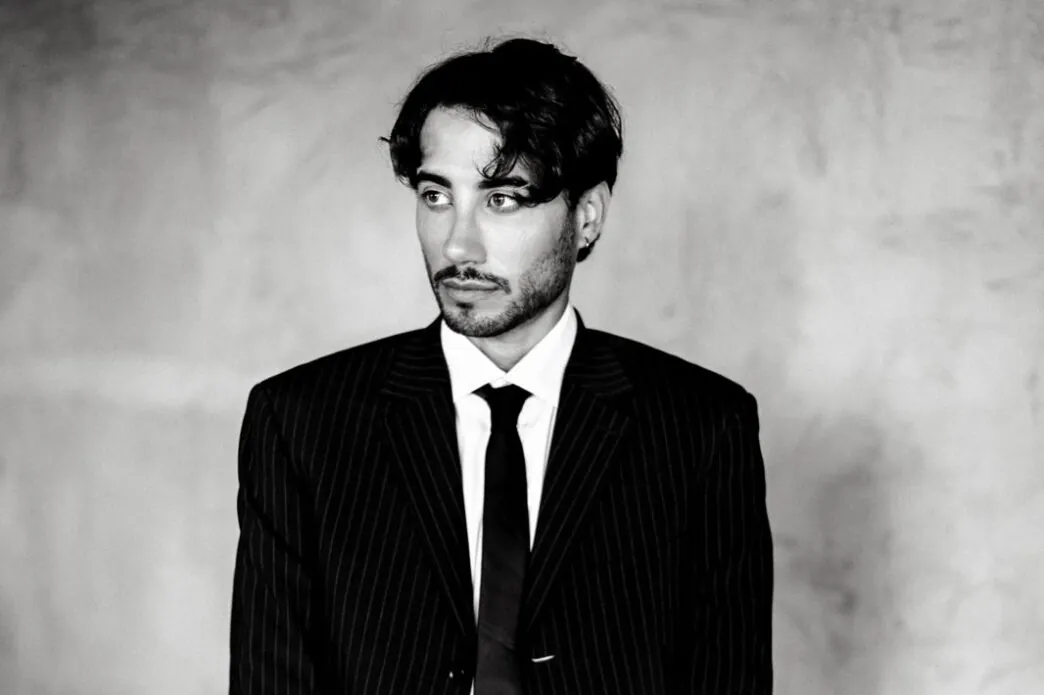
In the quiet heart of Malta, Luke Azzopardi’s atelier hums with the rhythm of couture. Each stitch, each cut, each delicate manipulation of fabric tells a story of devotion to craft, to history, and to the material itself. “I follow the couture method,” Azzopardi says. “Most of the things that you see are one-off pieces. We work directly on mannequins. We drape them. We’re a small team of pattern cutters and dressmakers, and I’m heavily involved in the process.”
There is no assembly line here. No outsourcing. No shortcuts. Even the brand’s leather bags are hand-stitched in-house. “For me, this is a brand of fabric,” he explains. “It’s not really about silhouette or making fashion statements. It’s about manipulating fabric and creating fabric from scratch to come up with pieces which really speak for themselves.”
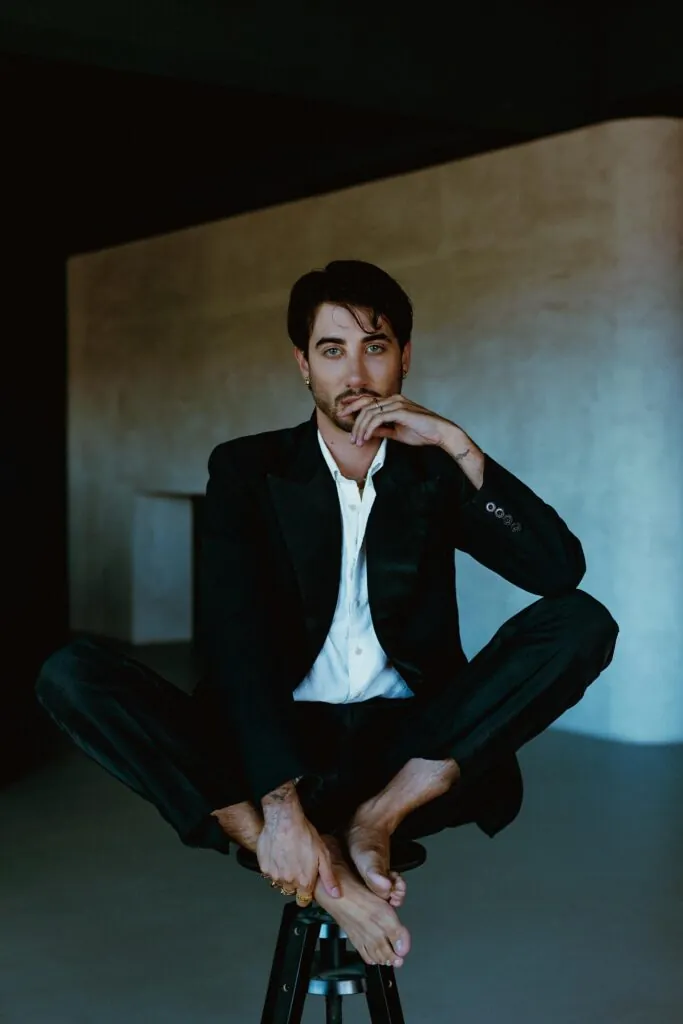
Azzopardi’s philosophy runs counter to the pace of modern fashion. He works with archival fabrics, some from the 1960s — embellishing them by hand, blending old and new until they transcend time. “They don’t have a lot of hanger appeal,” he laughs, “but that’s a good thing, because they come alive on the body,” he adds, “A successful garment to me, is when you have structure and shape, but also a lot of lightness to it. When you can see all the way through the construction.”
His fascination with imperfection is deliberate at all times. “I love when we leave stitches showing,” he says. “It’s like respecting the garment. It shouldn’t plaster a concrete wall—it’s meant to breathe.” He describes baked organza that’s intentionally “destroyed” to create a new texture. “I’m so bored of boring fabrics,” he adds with a smile. “It’s an industry made of fabric—and yet we don’t use it well enough.”
That respect for materiality extends to every element of the brand. The leather used for accessories is vegetable-tanned, allowed to age and evolve. “I don’t like when garments or accessories are preserved to death,” he says. “The museum becomes a mausoleum. Then they’re dead. When something’s alive, it’s constantly evolving.”
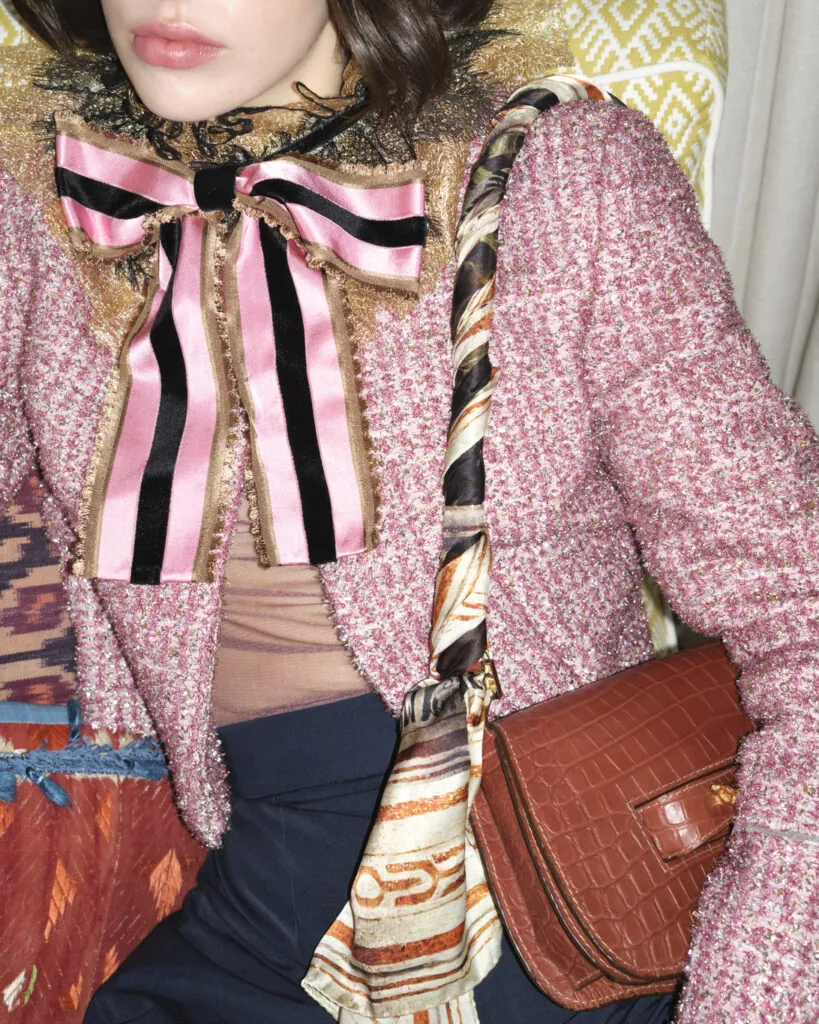
Azzopardi’s work, however, extends far beyond the atelier, “I design a lot of costumes for opera,” he says. “And you learn so much. For me, it’s all about the connections—the human connections, even with my garments. The connections you make with opera singers, who I fall in love with, are so incredible because sometimes the fashion industry and the people within it can be superficial—not because they want to, but because it’s an engine.
History, myth, and human connection converge in his hands. “The garments of the past inform the garments of the future,” Azzopardi says. “They speak about what we need as humans and where we’re going. And I think where we come from and where we’re going are the same thing.”
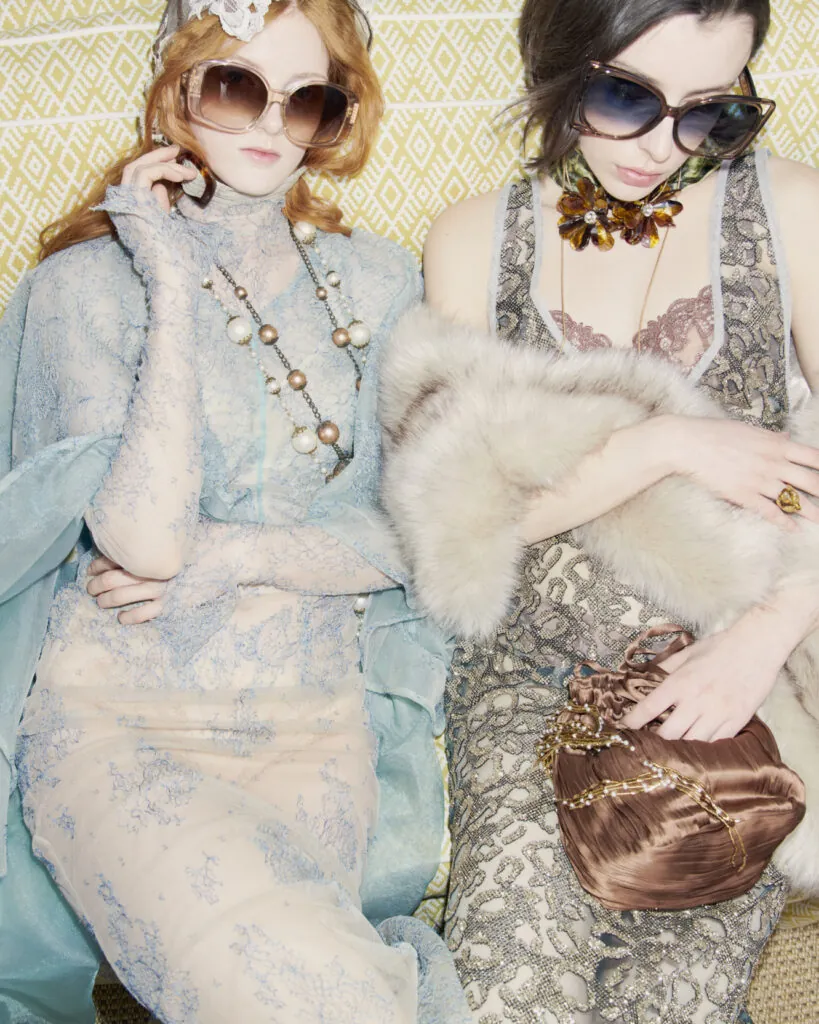
When asked where fashion should go next, his answer is clear: “Very far away from the current method of fashion making,” he says. “We need to return to the beauty and materiality of fabric itself. It’s our building block.” If his work has a muse, it’s Florence Welch. Azzopardi smiles as he gestures to a kimono he designed with her in mind. “I love alchemy and magic,” he says. “If you ask me what the direction is—it’s Florence wearing all of these.”
In Luke Azzopardi’s world, couture is not about perfection. It’s about reverence—an unending conversation between time, texture, and transformation.
Photographer: LISA ATTARD for Luke Azzopardi; Models and Campaign for Azzopardi Photographed by MAX GLATZHOFER; ART DIRECTION & PRODUCTION: ANCC
A version of this story appears in the Winter issue of gvMag.